What Electrical Troubleshooting Reveals About Hidden Faults
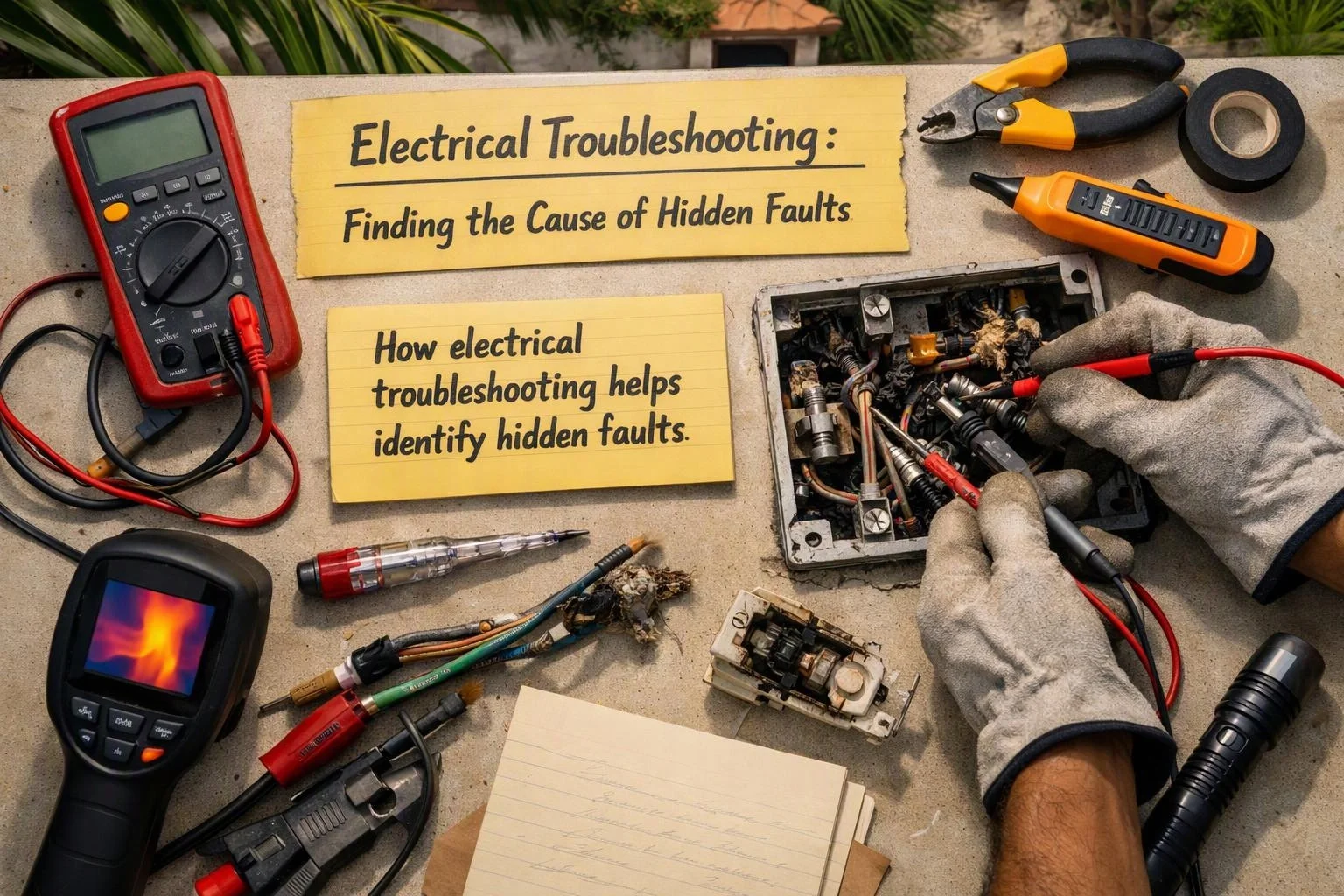
Electrical troubleshooting reveals hidden faults by tracing how symptoms relate to circuit components, connections, and power flow. An electrical circuit can have a problem at an outlet, switch, wire, neutral connection, or circuit breaker while the visible symptom appears somewhere else.
Our team connects the reported symptom to the affected circuit and tests likely failure points. This diagnosis helps us separate a local component failure from a wider electrical wiring problem.
What Signs Suggest a Hidden Electrical Fault?
A hidden electrical fault may show up through changes in power, sound, temperature, or odor. These signs deserve attention because the visible component may not be the true source.
We use these symptoms as clues, not as a final diagnosis. Our testing follows the symptom through the circuit to identify the unsafe condition.
How We Trace the Cause Behind an Electrical Symptom
Fault isolation traces a symptom from the affected device through the circuit until testing identifies the faulty component or connection. Our team follows a controlled process so the repair recommendation matches the actual problem.
We also consider recent appliance use, prior repairs, and changes in the home. These details can help us trace intermittent power and faults that do not appear during every test.
What Common Causes Can Electrical Troubleshooting Expose?
Electrical troubleshooting can expose loose connections, damaged wiring, overloaded circuits, and failing electrical components as causes of hidden faults. The same symptom can result from different causes, so our team tests before choosing a repair.
Our crew checks the condition and role of each affected component. We then explain whether the repair involves an outlet, light switch, circuit breaker, or electrical wiring.
How Flickering Lights, Dead Outlets, and Buzzing Point to Different Faults
Flickering lights, dead outlets, and buzzing components provide different clues, but testing is needed to identify the actual fault instead of assuming the symptom names the cause. Flickering may involve a loose connection, a neutral wire, a changing load, or a circuit breaker.
A dead outlet may result from a local outlet failure or a problem farther along the circuit. A buzzing switch can point to a loose connection or electrical arcing, which requires prompt attention from our team.
We trace each symptom through the circuit and compare voltage readings at relevant points. This approach helps us identify whether the issue is local or connected to a wider wiring fault.
Electrical Troubleshooting Versus Electrical Repair
Electrical troubleshooting identifies the cause of a problem, while electrical repair corrects the faulty component, connection, or wiring after the cause is established. We may complete both services during one visit when the repair path is clear and safe.
| Service | Main purpose | Examples |
|---|---|---|
| Electrical troubleshooting | Locates and confirms the source of the fault | Fault diagnosis, circuit mapping, voltage testing, and fault isolation |
| Electrical repair | Corrects the confirmed problem | Outlet repair, light switch repair, circuit breaker repair, and electrical wiring repair |
Our team explains the findings before repair work begins. The quote depends on the affected components, access, wiring condition, and the repair required to correct the fault.
How to Prepare Your Home for Electrical Troubleshooting
Homeowners can prepare for electrical troubleshooting by recording symptoms, identifying affected areas, and keeping electrical panels and devices safely accessible. Clear information helps our team connect the complaint to the correct circuit.
Do not remove covers, handle exposed wiring, or continue using a hot, smoky, sparking, or buzzing component. Tell us what you observed so we can plan a safe inspection.
How to Prevent Recurring Electrical Faults
Preventing recurring electrical faults requires reducing circuit strain, replacing damaged electrical components, and addressing warning signs before they worsen. Our team can identify conditions that may cause the same symptom to return.
Safe appliance use also means following the equipment instructions and avoiding damaged power cords. We investigate repeated symptoms so maintenance addresses the cause, not only the visible result.
When an Electrical Fault Needs Emergency Attention
An electrical fault needs emergency attention when smoke, sparks, burning odors, exposed wiring, electric shock, or rapidly worsening power loss creates an immediate safety concern. Turn off power only when you can do so safely, keep away from the affected area, and contact Earth Electric for Emergency Electrical Repair.
Do not touch exposed wiring, investigate a sparking outlet, or keep resetting a circuit breaker that trips repeatedly. Our team treats these signs as safety concerns and works to identify the source before recommending the repair.
How Earth Electric Turns Troubleshooting Findings Into the Right Repair
Earth Electric uses troubleshooting findings to explain the fault, outline the needed repair, and provide a clear path to resolving the electrical problem. We connect the test results to the affected outlet, light switch, circuit breaker, or electrical wiring.
Our team explains what caused the symptom, what work is needed, and what the quote includes before repair begins. We provide Free Estimates Available and use the findings to guide outlet repair, light switch repair, circuit breaker repair, electrical wiring repair, or emergency electrical repair.
Contact Earth Electric to describe the symptoms and request an electrical troubleshooting visit.
Questions About Hidden Electrical Faults
Can a dead outlet indicate a problem somewhere else in the circuit?
Yes, a dead outlet can indicate a problem somewhere else in the circuit. Earth Electric traces power through connected outlets, switches, wiring, and the circuit breaker to locate the actual fault.
Why do lights flicker when an appliance turns on?
Lights can flicker when an appliance turns on because the circuit may have a loose connection, an overloaded condition, or another wiring fault. We test voltage and inspect the circuit to identify the cause.
What should I do if an electrical outlet is warm or buzzing?
A warm or buzzing electrical outlet should be taken out of use, kept clear, and checked for an electrical fault. Contact Earth Electric promptly, especially if the outlet also shows discoloration, burning odor, smoke, or sparks.
Should I reset a circuit breaker that keeps tripping?
No, you should not keep resetting a circuit breaker that keeps tripping. Stop using the affected circuit and contact us so we can diagnose the cause safely.
What information should I give Earth Electric before an electrical troubleshooting visit?
Give Earth Electric the affected rooms and devices, the symptoms you noticed, when they occur, any tripped breaker, recent appliance use, and recent electrical work. This information helps our team prepare for circuit testing and fault isolation.
Related Resources
Emergency Electrical Repair Cost Factors: What Changes a 24-Hour Electrician Quote
What to AvoidEmergency Electrical Repair Mistakes: What Not to Do During a Power Problem
What to AvoidCircuit Breaker Replacement Mistakes: Common Errors That Cause Repeat Trips
How Long It TakesHow Long Does an Emergency Electrical Repair Take?