Emergency Electrical Repair Mistakes: What Not to Do During a Power Problem
Emergency electrical repair mistakes can turn a power problem into a shock, fire, or equipment hazard; Earth Electric identifies unsafe actions, explains the likely cost drivers, and shows when our team should handle emergency electrical repair.
Get a Free EstimateWhat Should You Do First During an Electrical Power Problem?
Electrical safety starts with stopping work, keeping people away from the hazard, and calling Earth Electric when the cause is not clearly safe to address.
A power outage may come from the utility, a tripped circuit breaker, or a fault inside the home electrical system. Look at the breaker panel only from a safe, dry position, and do not touch damaged equipment, exposed wiring, or anything near water.
Move people and pets away from smoke, sparks, heat, or damaged electrical equipment. If there is an active fire or immediate danger, leave the area and contact emergency services before requesting electrical troubleshooting from our team.
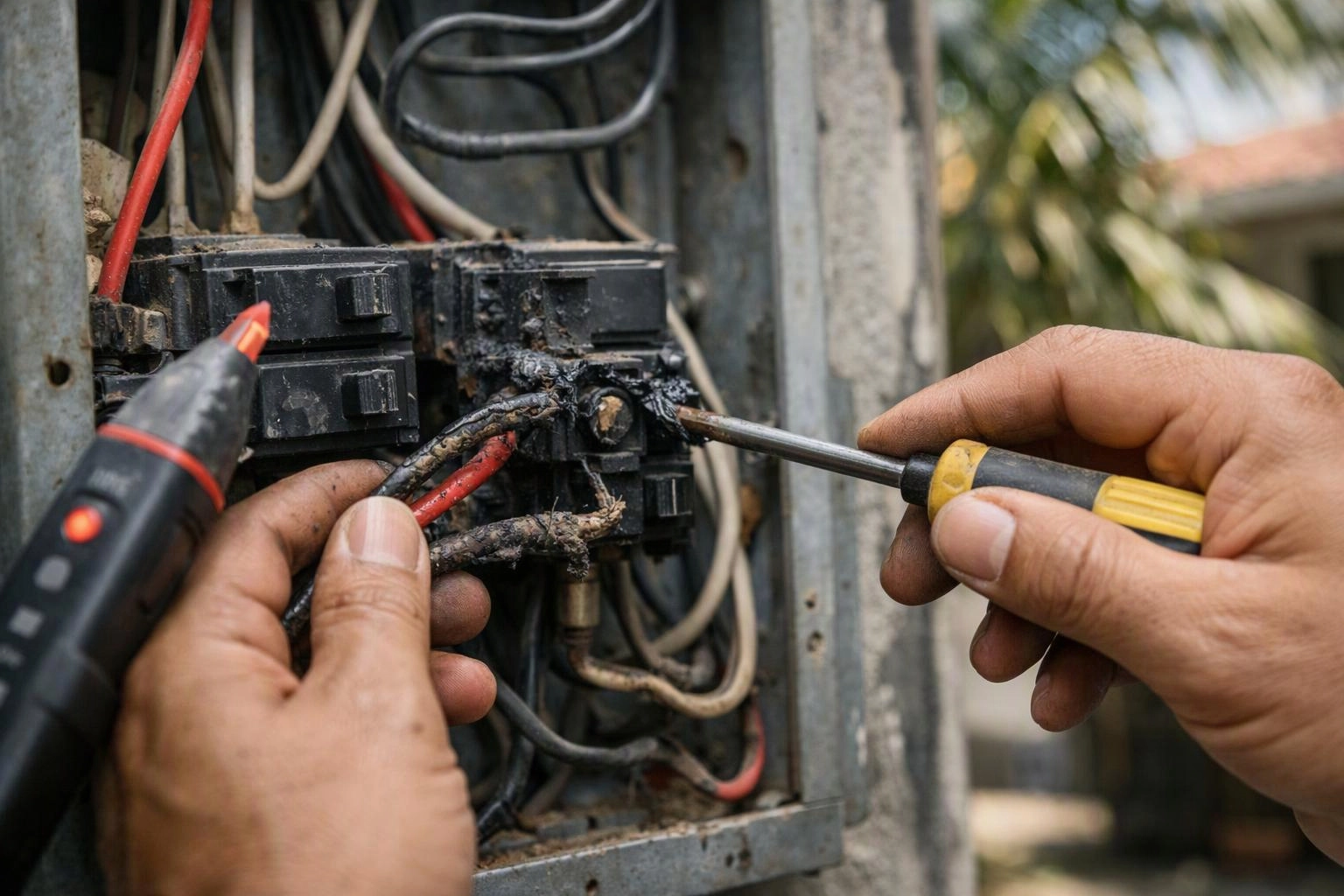
Emergency Electrical Repair Mistakes That Can Make the Problem Worse
Emergency electrical repair mistakes often happen when someone tries to restore power before identifying the fault. Electrical troubleshooting must account for the full home electrical system because a visible symptom may not show where the damage began.
Unsafe work can increase repair risk by damaging wiring, equipment, or overcurrent protection. We first make the situation safe, then trace the fault and explain the repair scope before approved work.
Mistake: Touching Exposed Wires or Electrical Equipment
Exposed wire can remain energized even when nearby lights or outlets have lost power. Touching an electrical panel, receptacle, or energized circuit can cause electric shock or create a path for current through the body.
This mistake usually happens when someone assumes that a power loss means the circuit is dead. We use safe isolation and circuit testing to identify energized parts before handling the wiring.
The cost depends on the location of the fault, hidden damage, and the parts needed to restore safe operation. Our team repairs or replaces affected wiring only after completing a qualified diagnosis.
Mistake: Resetting a Tripped Breaker Repeatedly
A circuit breaker that trips again may be responding to an overload, short circuit, damaged appliance, or wiring fault. Repeated resets can add heat and stress to the circuit.
People often reset a breaker because power returns briefly after the first attempt. We test the circuit, identify what caused the breaker trip, and correct the underlying problem before restoring service.
The repair cost depends on whether the issue is an overloaded circuit, a faulty breaker, an appliance problem, or damaged wiring. Replacing the breaker without finding the cause can leave the repair incomplete.
Mistake: Using Water Near a Power Problem
Water intrusion can make electrical equipment unsafe to touch and can increase the chance of electrical shock. A flooded area, wet electrical panel, or water-damaged receptacle requires distance and a safe shutdown.
This mistake happens when someone tries to clean up water before confirming that electrical equipment is isolated. We assess the affected area, check for water damage, and determine which components require replacement.
The cost depends on the extent of moisture, the equipment affected, and whether wiring or protective devices must be replaced. Do not re-energize wet equipment until our team completes an electrical safety inspection.
Mistake: Removing an Electrical Panel Cover
An electrical panel cover can shield live parts, but removing it can expose energized components that are not safe to handle. A breaker being off does not mean every part inside the panel is de-energized.
Homeowners may remove the cover to look for a loose wire or burned part. We complete the electrical panel inspection with safe test procedures and identify the fault without creating additional contact or arc hazards.
The cost depends on the panel condition, the damaged components, and access to the service entrance or branch wiring. A visual inspection from outside the panel cannot confirm that internal parts are safe.
Mistake: Replacing a Fuse or Breaker With the Wrong Rating
A fuse or circuit breaker rating must match the electrical wiring and the circuit design. Using a larger rating can defeat overcurrent protection and allow overheated wiring to remain energized.
This mistake often follows a nuisance trip when someone wants the circuit to stay on. We verify the circuit, protective device, and connected load before selecting a correct repair path.
The cost depends on whether the wrong device caused wiring damage, whether the circuit needs correction, and which replacement parts are required. The related guide “Circuit Breaker Replacement Mistakes: Common Errors That Cause Repeat Trips” explains why the rating matters.
Mistake: Using Extension Cords as Permanent Wiring
An extension cord is intended for temporary power and may not be suitable for continuous loads or fixed routing. Overheating can occur when a cord, plug, or receptacle carries more load than it can safely handle.
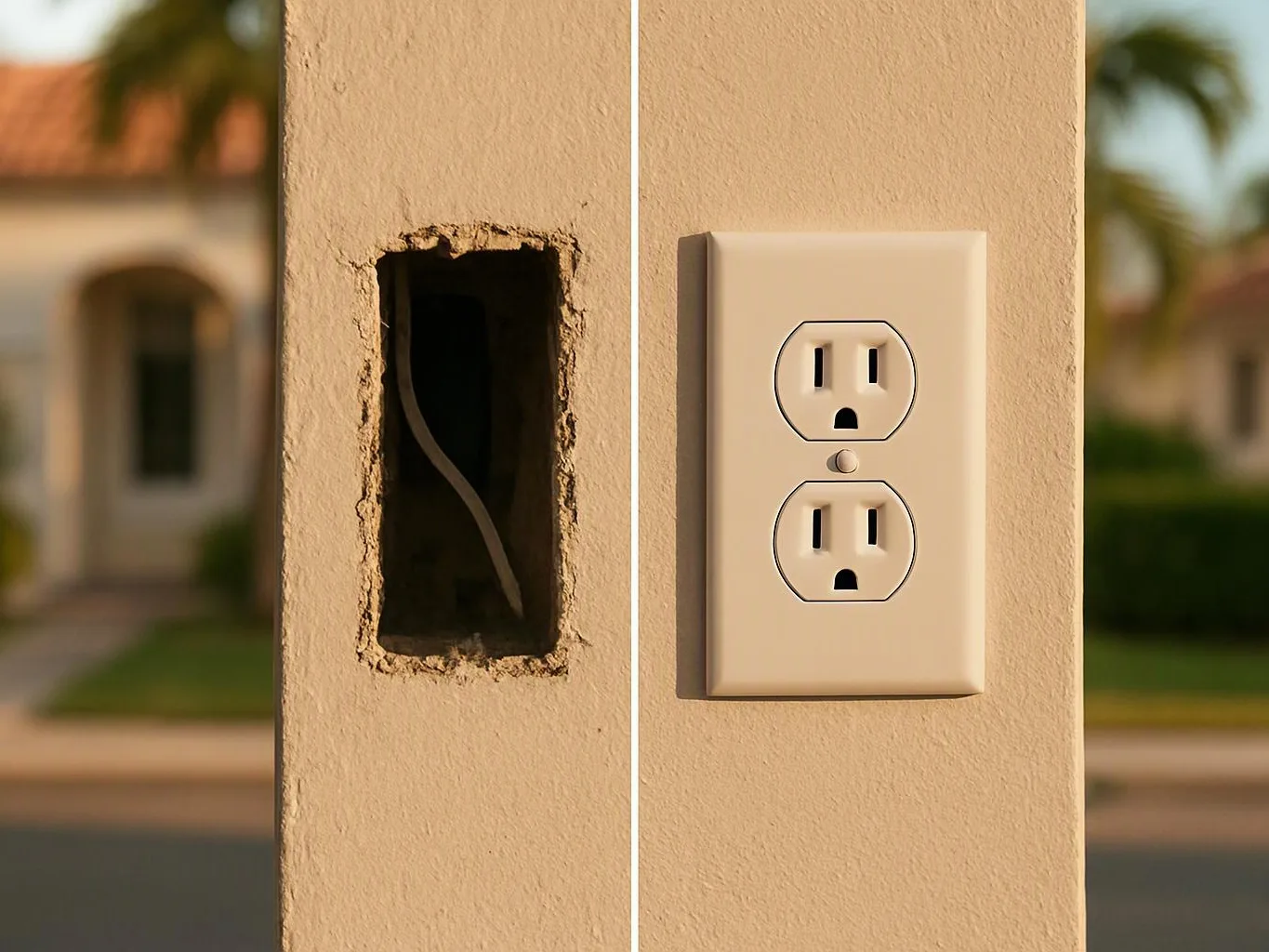
This mistake develops when an outlet stops working or a room lacks a convenient receptacle. We inspect the circuit and determine whether outlet repair, wiring repair, or a properly installed circuit is needed.
The cost depends on the fault location, the condition of the receptacle, and how difficult it is to access the wiring. We do not treat a temporary cord as a permanent correction to a home electrical system.
Mistake: Ignoring Burning Smells, Heat, Smoke, or Arcing
A burning smell, smoke from an outlet, hot outlet, or electrical arcing signals a possible fire hazard. Sparking and overheated wiring should never be treated as normal signs of a power problem.
People may keep using the outlet because the device still works. We isolate the affected circuit, inspect the outlet and connected wiring, and look for heat damage that may extend behind the wall.
The cost depends on the extent of electrical damage, the location of overheated parts, and whether surrounding wiring or equipment needs replacement. Stop using the affected area and request emergency electrical repair when these warning signs appear.
Mistake: Assuming a Utility Outage Explains Every Power Problem
A utility outage does not explain every power problem inside a home. Partial power loss, flickering lights, or power missing from only part of the house can point to an issue with the service entrance, panel, or branch circuits.
This mistake happens when a nearby outage makes every symptom seem unrelated to the home. We compare the affected areas, test the available circuits, and separate utility conditions from faults inside the property.
The cost depends on whether the cause is outside the home, at the service entrance, or within interior wiring. Our diagnosis helps define which equipment needs attention and prevents unnecessary repairs.
Mistake: Attempting DIY Repairs Without Finding the Fault
DIY electrical repair can worsen an electrical fault when the visible symptom is not the source of the problem. Replacing an outlet or reconnecting a wire without testing can hide damage and leave an energized wire in an unsafe condition.
This mistake often comes from trying to restore power quickly. We perform electrical troubleshooting, isolate the fault, and check related circuits before completing the repair.
The cost depends on the original fault, any hidden damage, and the work needed to correct earlier changes. Finding the cause first helps us define a safer repair scope.
When Should You Call Earth Electric Instead of Troubleshooting Yourself?
Call Earth Electric when the power problem involves visible damage, heat, smoke, water, exposed conductors, or a breaker that will not stay reset.
Homeowner safety comes first when the cause is unclear or the equipment may still be energized. Request our emergency electrical repair service for situations such as these:
How We Diagnose an Emergency Electrical Problem
Electrical diagnosis starts with making the area safe and collecting information about what changed. We ask which rooms are affected, whether appliances were running, and whether you noticed heat, smoke, sounds, or flickering lights.
Our team then performs circuit testing and an electrical panel inspection as the conditions allow. We use fault isolation to separate a breaker issue, receptacle failure, short circuit, overload, service problem, or wiring fault.
We explain the findings, identify damaged components, and outline the repair scope before approved work. This process helps prevent a temporary reset from being mistaken for a completed repair.
What Changes the Cost of Correcting a Power Problem?
The cost of correcting a power problem depends on the fault location, damage extent, parts required, wiring access, and whether related safety issues need correction; Earth Electric provides Free Estimates Available before approved work.
Faults that are easy to access may require less work than damage hidden behind finished surfaces or within the service equipment. The repair estimate also depends on whether we can repair a component safely or must replace affected wiring, a receptacle, a breaker, or other equipment.
We explain what the estimate covers, including diagnosis, necessary replacement parts, access needs, and the correction required to restore safe operation. We do not recommend replacing parts until the cause of the power problem is understood.
How to Request Safe Help for an Electrical Emergency
Request emergency electrical repair by sharing the power problem, visible warning signs, and any steps already taken. Clear information helps our team prepare for safe isolation and focused troubleshooting.
Earth Electric provides the safe shutdown, electrical troubleshooting, and electrical safety inspection needed to define the repair. Request emergency electrical repair when a power problem may involve damage or an unsafe circuit.
Questions About Emergency Electrical Repair Mistakes
Is it safe to reset a tripped breaker during a power problem?
No, repeated resets are not safe when the breaker trips again or the cause is unclear. Earth Electric tests the circuit and identifies the overload, short circuit, appliance fault, or wiring issue before restoring service.
What should I do if an outlet is hot or smells burnt?
Stop using the outlet, keep people away from it, and request electrical troubleshooting. Do not cover the outlet, spray it with water, or keep resetting the circuit because heat and a burning smell can signal damaged wiring.
Can a partial power outage indicate an electrical problem inside the house?
Yes, partial power loss can indicate a problem with the service entrance, electrical panel, branch circuit, or wiring inside the home. We test the affected areas to separate a utility condition from an internal electrical fault.
Should I unplug appliances during an electrical emergency?
Unplug appliances only when the area is dry and the plug and receptacle show no damage, heat, or sparking. Leave damaged or wet equipment alone, keep away from the hazard, and request emergency electrical repair.
Related Resources
Emergency Electrical Repair Cost Factors: What Changes a 24-Hour Electrician Quote
How Long It TakesHow Long Does an Emergency Electrical Repair Take?
Everything About ItWhole-House Surge Protection: Planning and Installation Questions
Everything About ItPool and Hot Tub Electrical Safety and Wiring Planning