Circuit Breaker Repair or Replacement: How to Decide
Circuit breaker repair warning signs usually point to a fault that needs diagnosis; Earth Electric checks the breaker, connected circuit, and panel to decide whether repair or replacement is appropriate.
Get a Free EstimateHow Do You Decide Between Circuit Breaker Repair and Replacement?
Circuit breaker repair suits a breaker with a correctable connection or circuit issue, while replacement suits a damaged, worn, incompatible, or repeatedly failing breaker after the cause has been checked.
A circuit breaker can trip because of an electrical overload, short circuit, ground fault, loose connection, damaged wiring, or a faulty breaker. We inspect the electrical panel and the electrical circuit so the visible symptom does not hide the real problem.
Our decision considers breaker condition, circuit wiring, panel capacity, breaker compatibility, and electrical safety. When the issue is outside the breaker, we address the circuit or arrange the needed Circuit Breaker Repair work as part of a complete diagnosis.
Circuit Breaker Repair Compared With Replacement
Repair focuses on a correctable fault in the connection, wiring, load, or panel. Replacement focuses on installing a compatible breaker when the existing device is damaged, unsuitable, or no longer reliable.
Our estimate scope explains the testing, parts, electrical panel repair, and related work needed for the selected option. Earth Electric provides Free Estimates Available so the decision is based on the condition found during inspection.
| Factor | Circuit Breaker Repair | Circuit Breaker Replacement |
|---|---|---|
| Cost drivers | Testing, access, connections, wiring, and panel repair needs | Breaker type, compatibility, access, installation, and related circuit work |
| Project timeline | Depends on the fault and the repair scope | Depends on diagnosis, compatible parts, and any panel work |
| Maintenance | Corrects the cause and supports continued inspection | Requires continued attention to loads, connections, and circuit performance |
| Best for | A suitable breaker with a correctable circuit or connection fault | A damaged, obsolete, incompatible, or persistently failing breaker |
What Are the Advantages of Circuit Breaker Repair?
Breaker repair can be appropriate when the device remains suitable and testing identifies a correctable cause. We use circuit diagnosis to separate a connection problem from a failed breaker.
Best for: A suitable breaker with a correctable connection, load, wiring, or panel fault.
When Is Circuit Breaker Repair the Better Choice?
Circuit breaker repair is the better choice when testing shows that the breaker itself remains suitable and the underlying issue is a correctable connection, load, wiring, or circuit fault.
An intermittent breaker trip may indicate a loose connection, overloaded circuit, short circuit, or ground fault. We perform electrical troubleshooting and circuit testing before deciding whether the breaker can stay in service.
Repair may also address damaged wiring or a poor terminal connection. We do not treat repeated tripping as a reason to keep resetting the breaker without finding the cause.
What Are the Advantages of Circuit Breaker Replacement?
Replacement is useful when a compatible new device can restore safe protection after the failure cause has been diagnosed. We confirm panel compatibility and circuit requirements before installing a replacement circuit breaker.
Best for: A breaker with physical damage, heat damage, incompatibility, or failure after circuit testing.
Which Warning Signs Point to Circuit Breaker Replacement?
Circuit breaker replacement becomes more likely when a breaker shows physical damage, heat damage, persistent failure, poor fit, or repeated trips after the connected circuit has been diagnosed.
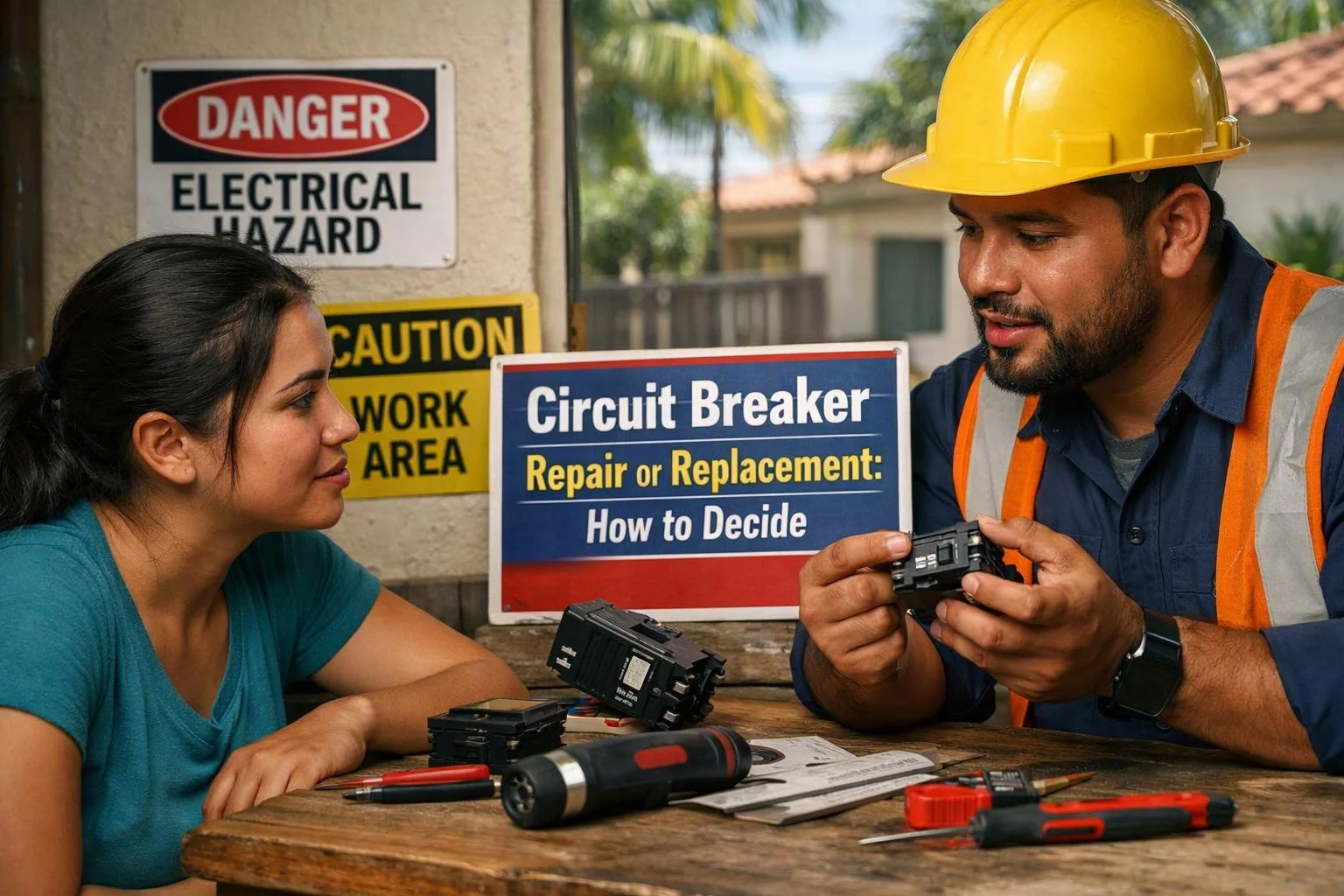
Warning signs include burn marks, melting, a burning smell, cracking, a loose breaker, or a breaker that will not reset. A warm electrical panel or melted breaker can point to heat damage that needs prompt inspection.
We inspect the breaker terminal, bus bar, circuit wiring, and surrounding panel before installing a compatible replacement. The cause must be corrected so a new breaker does not keep failing.
What Should You Do When a Circuit Breaker Will Not Reset?
A circuit breaker that will not reset signals an active fault or unsafe condition, so you should stop repeated reset attempts, disconnect affected loads when safe, and arrange electrical troubleshooting.
Do not remove the panel cover or touch exposed wiring. We inspect the condition before attempting a circuit breaker reset or recommending repair.
How Can You Prepare for Circuit Breaker Replacement?
Circuit breaker replacement planning starts with identifying the circuit, confirming panel and breaker compatibility, diagnosing the cause of failure, and defining the work included in the estimate.
Write down which rooms or equipment lose power and note any repeated trips, heat, odor, or unusual sounds. We use that information with circuit testing to complete a load assessment and review panel capacity.
Replacement planning also covers breaker type, circuit rating, circuit wiring, access, and electrical permit requirements. Our estimate explains the planned work and any related electrical panel repair.
What Does Earth Electric Check Before Recommending Repair or Replacement?
Earth Electric checks the breaker, electrical panel, circuit wiring, and connected load before recommending repair or replacement.
We then explain the repair checklist, replacement planning, estimate scope, and any electrical permit requirements that apply to the work.
What Should You Ask About Circuit Breaker Repair?
Repair diagnosis should explain whether the breaker, circuit wiring, load, or electrical panel caused the warning sign.
Ask whether testing found repeated tripping, an electrical overload, short circuit, ground fault, loose connection, damaged wiring, or a faulty breaker. Ask which part of the electrical panel repair is included and whether the recommended replacement has confirmed panel compatibility.
Ask for a clear estimate scope that identifies testing, parts, installation, related repairs, and electrical safety checks. Our team explains why repair or replacement fits the condition found.
Questions About Circuit Breaker Repair or Replacement
Can a circuit breaker be repaired without replacing it?
Yes, a circuit breaker may be repaired without replacement when testing finds a correctable connection, wiring, load, or panel fault and the breaker remains suitable. Earth Electric checks the device and its circuit before making that recommendation.
Why does a circuit breaker keep tripping after replacement?
A circuit breaker can keep tripping after replacement because an electrical overload, short circuit, ground fault, damaged wiring, or connected equipment problem remains. We test the electrical circuit and load instead of treating the new breaker as the complete solution.
Is a breaker that feels warm a warning sign?
Yes, a breaker that feels warm can be a warning sign of a loose connection, excess load, poor fit, or heat damage. Avoid touching the panel further and arrange an inspection if warmth occurs with a burning smell, burn marks, or repeated tripping.
What should I turn off before circuit breaker troubleshooting?
Turn off or unplug affected loads only when doing so is safe, and stop if you see smoke, heat, exposed wiring, or burning damage. Do not remove the panel cover; we complete the electrical troubleshooting and testing.
What does a circuit breaker replacement estimate include?
A circuit breaker replacement estimate can include diagnosis, breaker compatibility checks, panel and circuit inspection, the compatible replacement, installation, related wiring work, and safety testing. We explain the work scope before proceeding, and Free Estimates Available.
Get a Circuit Breaker Repair or Replacement Assessment
Earth Electric can inspect the warning sign, identify the underlying electrical fault, and explain whether repair or replacement fits the condition. Our team provides a clear estimate scope for the required electrical work.
Contact Earth Electric to arrange an assessment and discuss the safest next step.
Related Resources
Emergency Electrical Repair Cost Factors: What Changes a 24-Hour Electrician Quote
What It CostsElectrical Panel Upgrade Cost Factors: Size, Capacity, Wiring, and Installation Scope
What to AvoidEmergency Electrical Repair Mistakes: What Not to Do During a Power Problem
What to AvoidCircuit Breaker Replacement Mistakes: Common Errors That Cause Repeat Trips