
What Is a Load Calculation?
Load calculation is an electrical analysis that estimates the power demand of a home or building. The analysis accounts for fixed equipment, heating and cooling systems, appliances, lighting, and future additions. Electricians use the result to assess whether an electrical panel and service can support the connected demand without excessive strain.
Quick Facts About Load calculation
Category
Electrical planning analysis
Used for
Panel and service capacity planning
Common confusion
Circuit count does not equal total electrical load
Also called
Electrical load calculation, Service load calculation
Often discussed with
Electrical Panel Upgrade, Dedicated Circuit Installation
Key Takeaways About Load calculation
- It evaluates demand, not just the number of circuits.
- Panel upgrades depend on the building’s calculated electrical demand.
- A load calculation is not the same as a circuit inspection.
How Load calculation Works
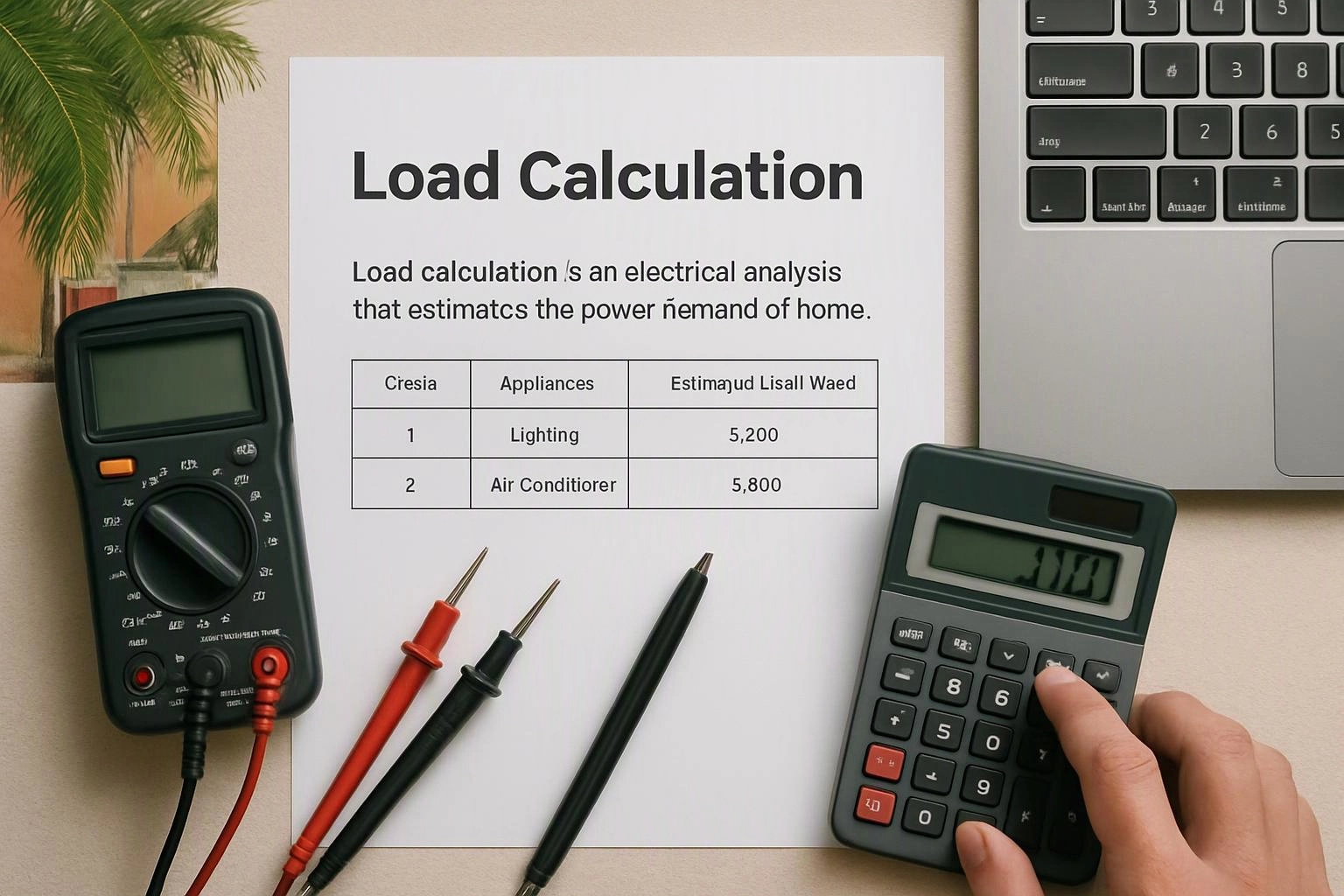
Load calculation begins with an inventory of equipment that uses electricity in the property. The analysis considers the rated demand of appliances, air conditioning equipment, water heaters, lighting, receptacles, and other connected loads. It also considers how equipment operates, because some devices run continuously while others operate occasionally.
Related glossary terms: Electrical load, Circuit overload, EV load management.
The calculated demand helps an electrician compare the property’s expected usage with the capacity of the existing electrical service and panel. A panel upgrade may require a larger service, new feeders, or changes to branch circuits. The result also helps identify whether a planned addition, such as an electric vehicle charger, needs a separate design review. Electrical load describes the demand from connected equipment, while circuit overload describes a condition where a circuit carries more current than it should.

From the Earth Electric team
When we prepare a load calculation for an electrical panel upgrade, we review the property’s existing equipment and planned additions. We compare the calculated demand with the available service and panel capacity. Our team also checks whether major loads need dedicated circuits or changes to the overall panel design.
Load calculation in Practice: A Real-World Example
A homeowner plans an electrical panel upgrade while keeping central air conditioning, an electric range, and adding an electric vehicle charger. The load calculation accounts for those systems together and helps determine whether the existing service can support the planned equipment.
Related Terms
Electrical load
Electrical load is the amount of electrical power that connected equipment draws from a circuit or…
Circuit overload
A circuit overload is a condition in which connected devices draw more current than the circuit…
EV load management
EV load management is a system that controls electric vehicle charging to keep total electrical demand…
Wire gauge
Wire gauge is a standardized way to describe a conductor’s thickness and current-carrying capacity. The gauge…
Earth Electric
Have Questions About Load calculation?
Contact Earth Electric for practical guidance on Load calculation and related 24 hour electrician work in Miami.