
What Is Wire Gauge?
Wire gauge is a standardized way to describe a conductor’s thickness and current-carrying capacity. The gauge designation helps electricians select wire that fits the circuit’s electrical load, installation method, and terminal connections. Smaller gauge numbers generally indicate thicker conductors, while larger gauge numbers generally indicate thinner conductors.
Quick Facts About Wire gauge
Category
Electrical conductor measurement
Used for
Selecting wire for circuit loads
Common confusion
Gauge does not describe insulation or cable length
Also called
American Wire Gauge, AWG
Often discussed with
Electrical Wiring Repair, Electrical Troubleshooting
Key Takeaways About Wire gauge
- Gauge describes conductor thickness through a standardized sizing system.
- The selected gauge must suit the circuit’s electrical load.
- Gauge is not the same as wire length or insulation type.
How Wire gauge Works
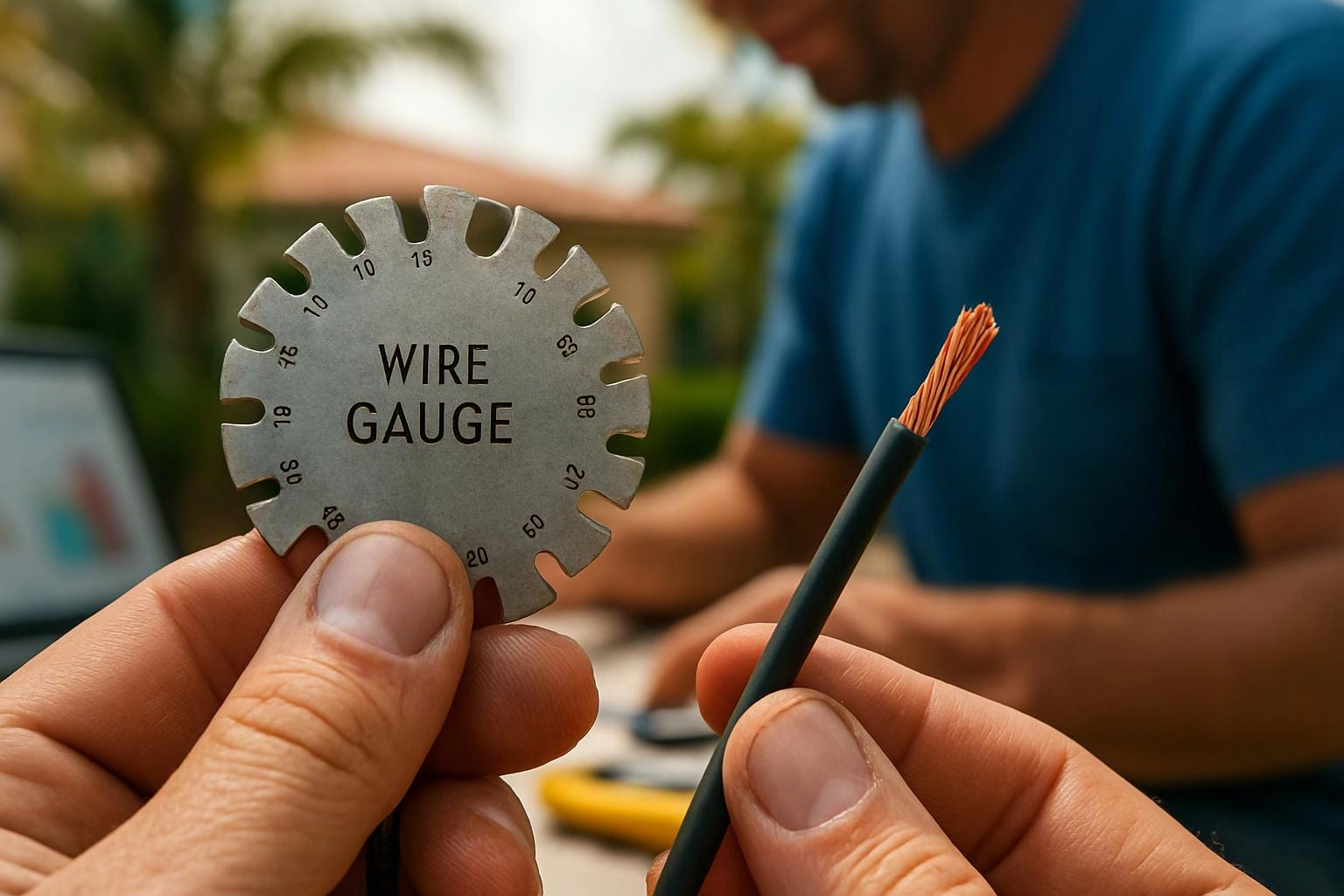
Wire gauge assigns a size designation to a conductor based on its thickness. The designation helps match the conductor to the electrical load, the circuit’s wiring method, and the connection points. A thicker conductor generally carries more current and has lower resistance than a thinner conductor made from the same material.
Related glossary terms: Electrical load, Voltage drop, Aluminum conductor.
Electricians check gauge along with conductor material, insulation rating, circuit length, and terminal size. Copper and aluminum conductors can have different performance characteristics at a similar physical size. A wire that fits one circuit may be unsuitable for another because the load, distance, heat exposure, or connection hardware changes.

From the Earth Electric team
When we inspect wiring, we identify the conductor material and gauge before selecting a repair method. We also check the circuit load, insulation condition, terminals, and splices. A visible wire size alone does not establish whether the complete circuit is suitable for its intended use.
Wire gauge in Practice: A Real-World Example
During an electrical wiring repair, a damaged conductor may need replacement with wire that matches the existing circuit’s gauge, material, insulation, and connection hardware. The repair also requires checking whether the circuit load suits that conductor.
Related Terms
Electrical load
Electrical load is the amount of electrical power that connected equipment draws from a circuit or…
Voltage drop
Voltage drop is the reduction in electrical pressure that occurs as current travels through a conductor…
Aluminum conductor
An aluminum conductor is an electrical wire or cable component made from aluminum that carries current…
Neutral wire
A neutral wire is a current-carrying conductor that returns electricity from a load to the electrical…
Earth Electric
Have Questions About Wire gauge?
Contact Earth Electric for practical guidance on Wire gauge and related 24 hour electrician work in Miami.