
What Is Electrical Load?
Electrical load is the amount of electrical power that connected equipment draws from a circuit or electrical system while operating. The load may come from lighting, appliances, motors, heating equipment, or electronic devices. Electricians assess load to match conductors, breakers, panels, and service capacity with the equipment being supplied.
Quick Facts About Electrical load
Category
Electrical system measurement
Used for
Circuit and panel assessment
Common confusion
Load is not voltage
Often discussed with
Electrical Troubleshooting
Key Takeaways About Electrical load
- Load comes from connected equipment drawing power.
- Different devices place different demands on a circuit.
- Load is not the same as voltage or wire size.
How Electrical load Works
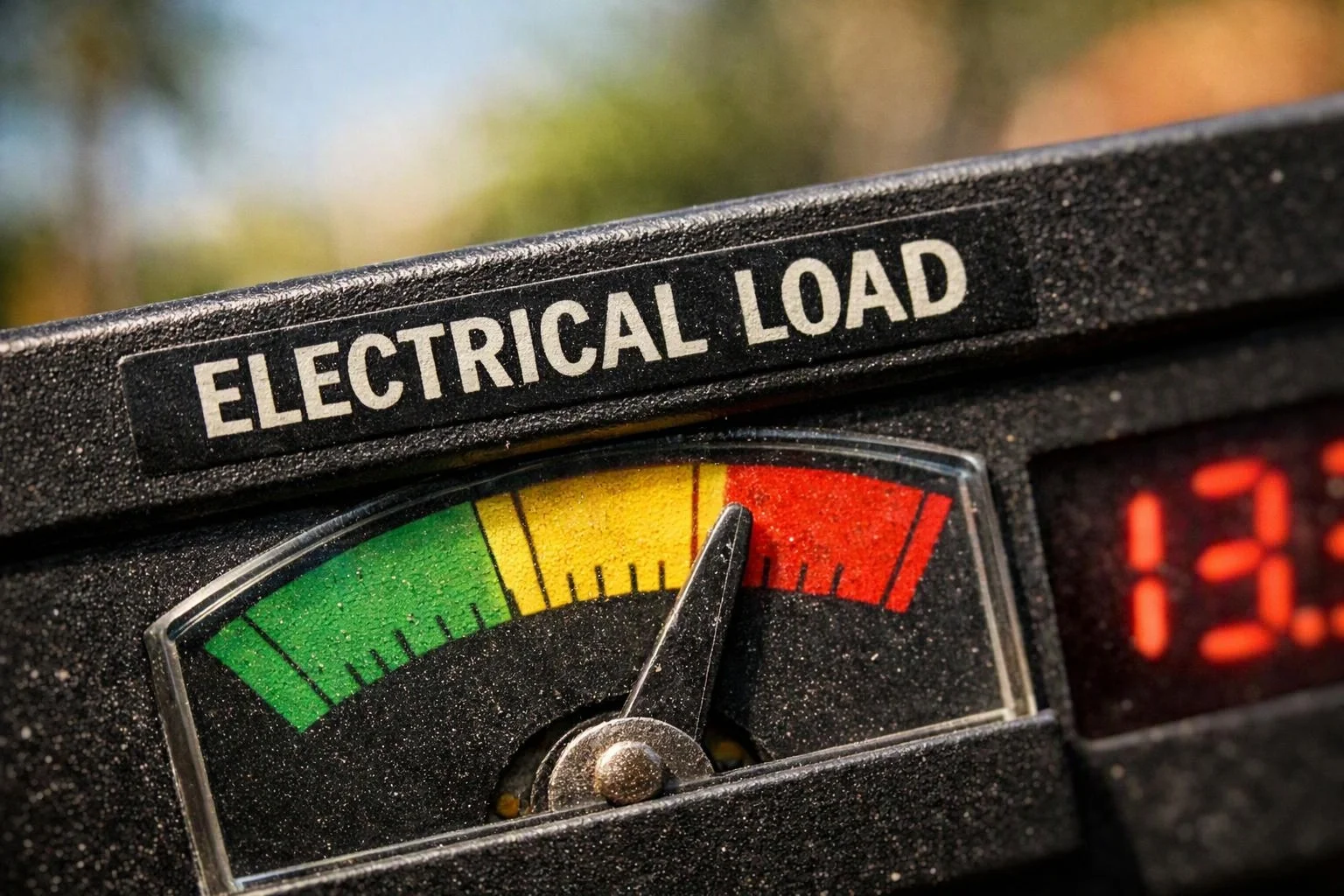
Electrical load works through the relationship between a power source and the equipment connected to it. A device draws current when it operates, and the amount depends on the device design and operating condition. A motor, air conditioner, light, or receptacle can create a different demand on the same system.
Related glossary terms: Circuit overload, Load calculation, Voltage drop.
Electricians review load by examining connected equipment, circuit conductors, protective devices, and available capacity. Load calculation helps show whether a circuit or panel can supply equipment without excessive demand. A changing load can also explain why a breaker trips when several devices operate together. Voltage drop may affect equipment performance when wiring conditions limit power delivery.
From the Earth Electric team
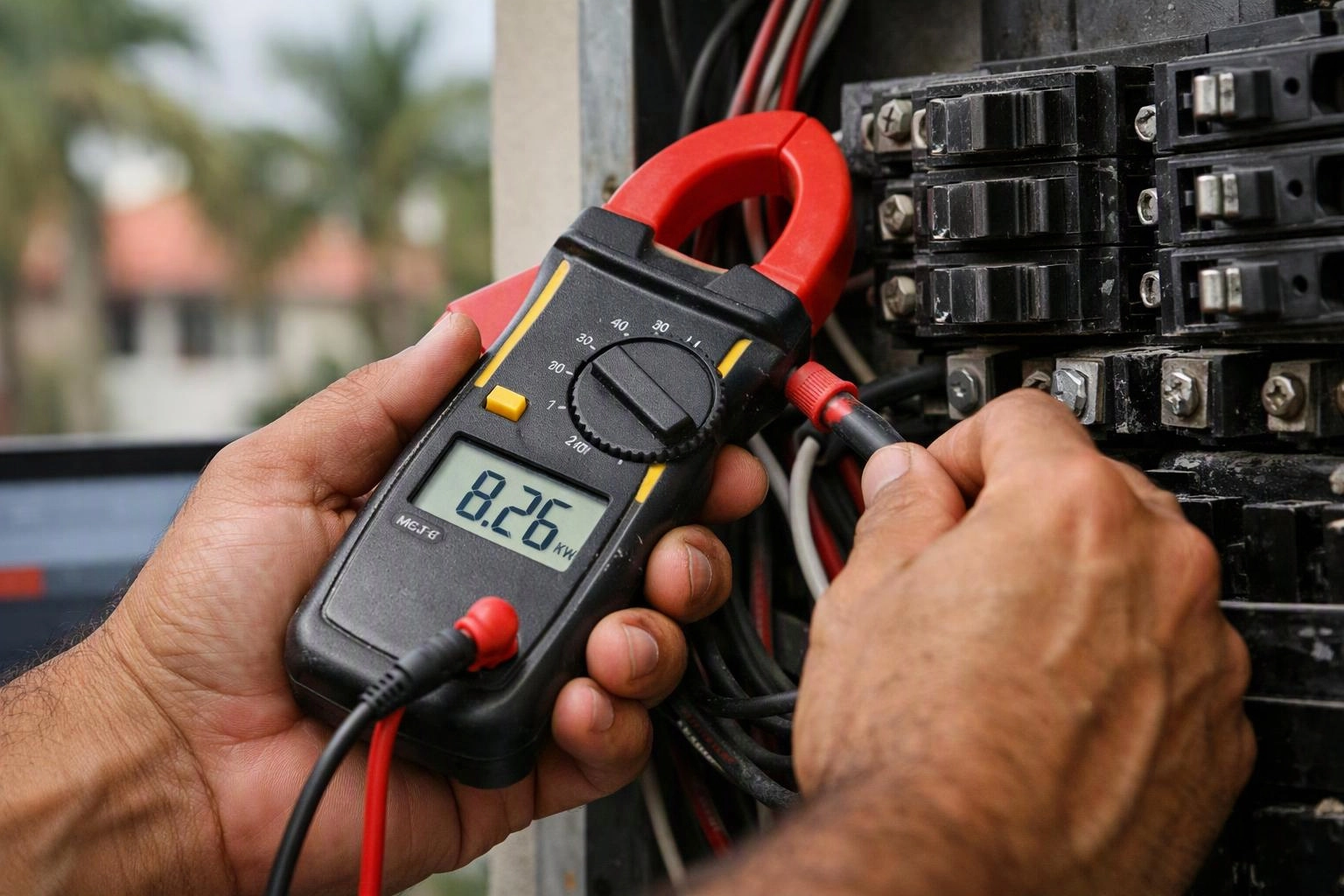
When we troubleshoot an electrical problem, we identify the equipment connected to the affected circuit and observe how the system responds during operation. Our team checks for overloaded circuits, unexpected demand, and equipment that may be drawing power irregularly. We connect those findings with breaker behavior, wiring condition, and panel capacity.
Electrical load in Practice: A Real-World Example
A Miami home may have an air conditioner, pool equipment, kitchen appliances, and lighting operating during the same period. During electrical troubleshooting, we compare the equipment in use with the affected circuit to determine whether the combined demand contributes to a trip or voltage problem.
Related Services
Related Terms
Circuit overload
A circuit overload is a condition in which connected devices draw more current than the circuit…
Load calculation
Load calculation is an electrical analysis that estimates the power demand of a home or building…
Voltage drop
Voltage drop is the reduction in electrical pressure that occurs as current travels through a conductor…
Wire gauge
Wire gauge is a standardized way to describe a conductor’s thickness and current-carrying capacity. The gauge…
Earth Electric
Have Questions About Electrical load?
Contact Earth Electric for practical guidance on Electrical load and related 24 hour electrician work in Miami.