What Is an Inverter?
An inverter is a power-conversion device that changes direct current into alternating current for use by household electrical equipment. In bidirectional systems, the same device can reverse the process and send alternating current back into direct-current storage. An inverter also manages voltage, frequency, charging, and power flow between an energy source, a battery, and connected loads.
Quick Facts About Inverter
Category
Power-conversion equipment
Used for
Connecting batteries with household circuits
Common confusion
An inverter does not store energy
Also called
Power inverter, Bidirectional inverter
Often discussed with
Bidirectional EV Home-Backup Integration, EV Charger Installation
Key Takeaways About Inverter
- Bidirectional models convert power in both directions.
- The device coordinates batteries with household electrical loads.
- An inverter is not the same as a battery or generator.
How Inverter Works
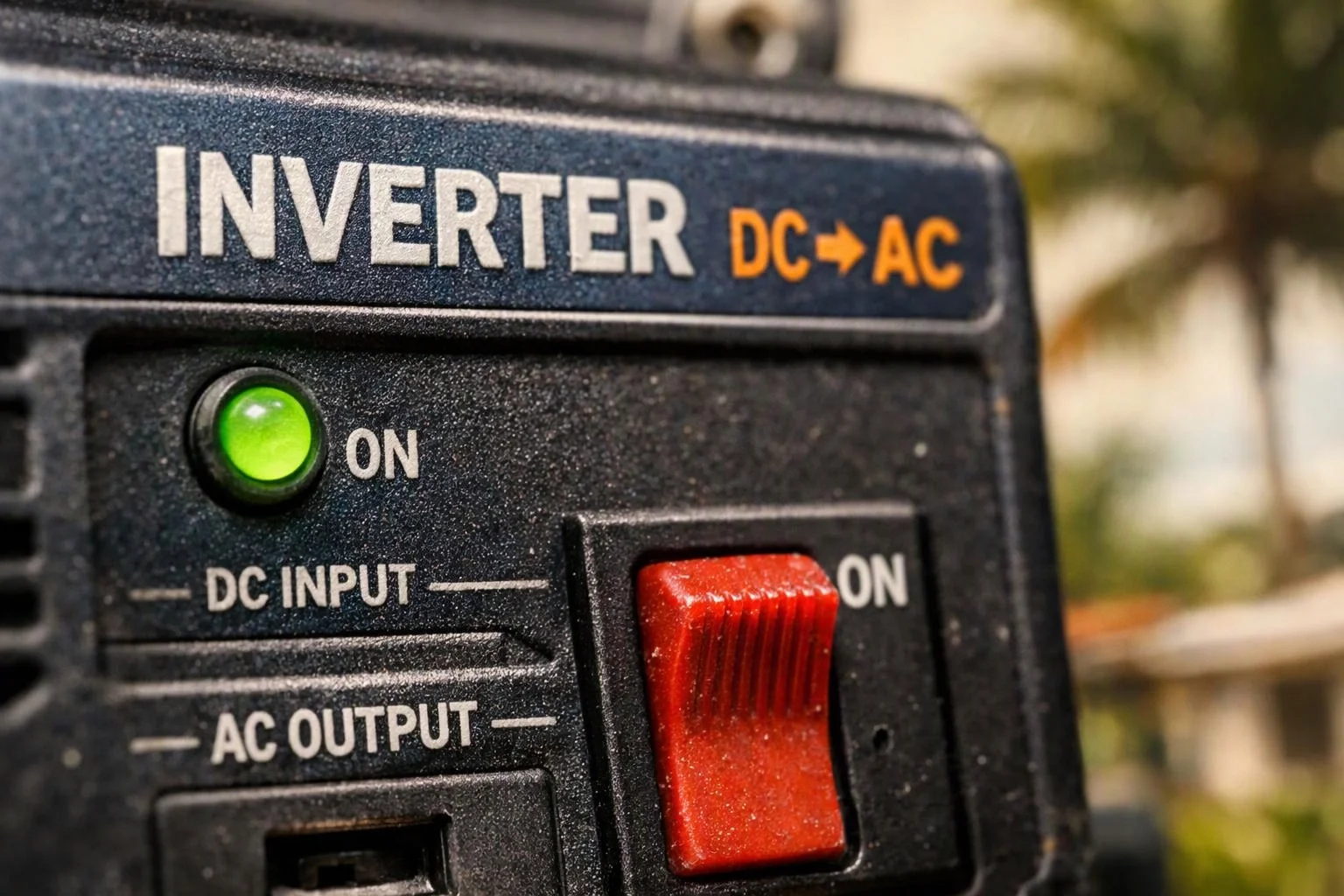
An inverter uses electronic switching and control circuits to shape direct current into alternating current that household equipment can use. The device monitors voltage and frequency, then adjusts its output to match the connected electrical system. In a bidirectional setup, the inverter also changes alternating current into direct current for battery charging.
Related glossary terms: EV load management, Transfer switch, Electrical load.
During backup operation, the inverter controls power flow between the battery and selected household circuits. Its control system can coordinate with an energy management system, a transfer switch, or an electric vehicle battery. A bidirectional EV system may send stored energy to the home when grid power is unavailable, then return to charging when normal power resumes. The inverter must be matched to the electrical system, connected loads, and battery design.
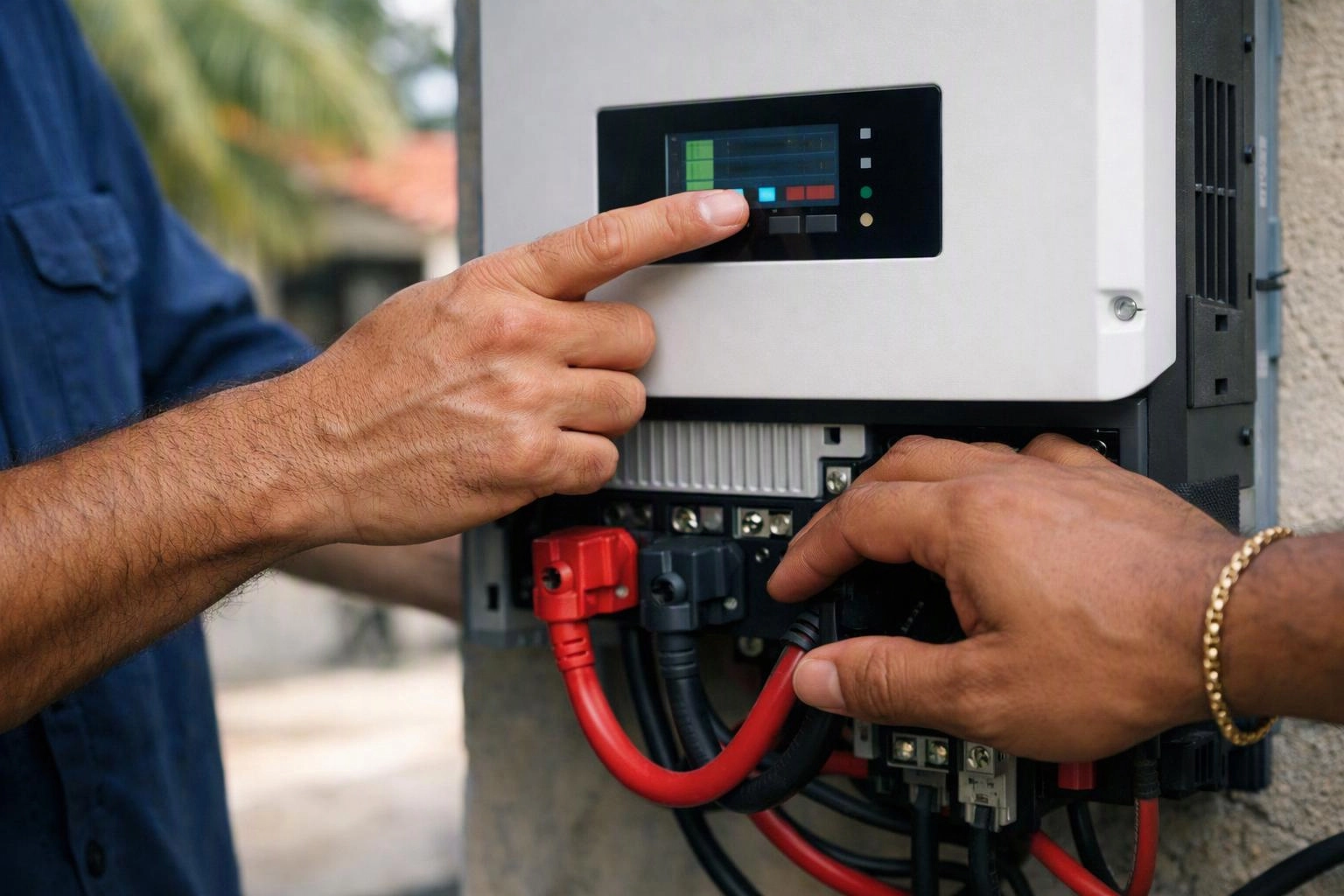
From the Earth Electric team
When we work on bidirectional EV home-backup integration, we check the inverter's compatibility with the vehicle, charging equipment, backup circuits, and service equipment. We also verify how the system isolates backup power from the utility and review settings that control charging, discharge, and load priority.
Inverter in Practice: A Real-World Example
A Miami homeowner may connect an electric vehicle to a bidirectional inverter and selected backup circuits. During an outage, the inverter draws energy from the vehicle battery and supplies compatible household loads while controlling the power exchange.
Related Terms
EV load management
EV load management is a system that controls electric vehicle charging to keep total electrical demand…
Transfer switch
A transfer switch is an electrical device that moves selected circuits between a utility power source…
Electrical load
Electrical load is the amount of electrical power that connected equipment draws from a circuit or…
Load calculation
Load calculation is an electrical analysis that estimates the power demand of a home or building…
Earth Electric
Have Questions About Inverter?
Contact Earth Electric for practical guidance on Inverter and related 24 hour electrician work in Miami.