Building a Long-Term Electrical Maintenance and Repair Plan
A home electrical maintenance plan identifies non-urgent electrical repairs through inspection, documentation, risk ranking, and scheduling; Earth Electric checks the system, explains priorities, and prepares the repair plan.
Get a Free EstimateHow to Identify Electrical Tasks That Can Wait
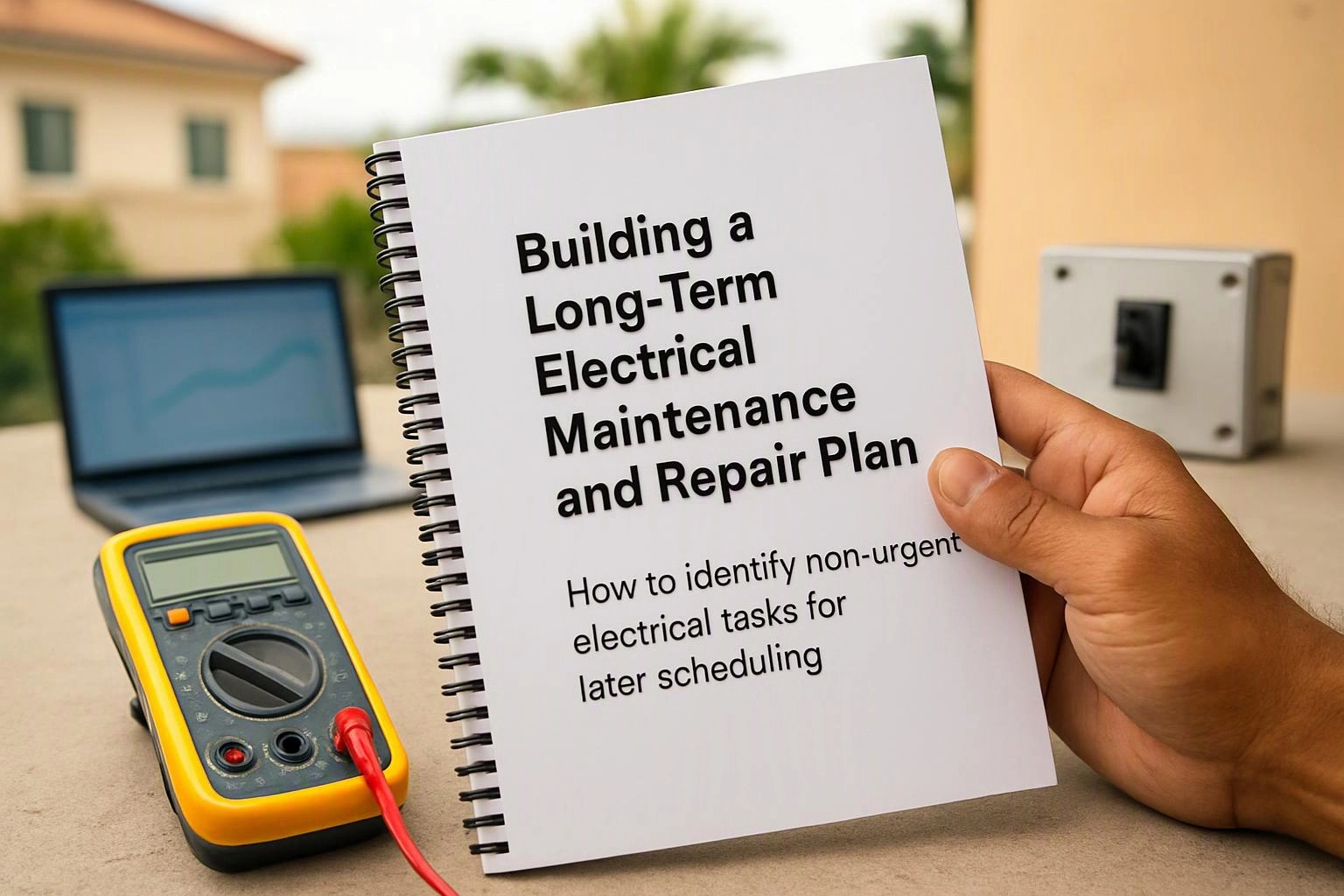
Non-urgent electrical tasks are issues that do not create an immediate shock, fire, power-loss, or equipment-damage risk but still deserve documented follow-up. Earth Electric reviews each condition during a safety inspection and assigns a repair priority based on risk and impact.
A loose cover, aging component, or minor performance concern may be suitable for planned electrical work when the system remains safe and stable. We document the condition and explain what signs would make the task more urgent.
What to Record in a Home Electrical Service History
An electrical service history gives homeowners a clear record of system conditions, completed work, and follow-up needs. Our team uses the record to connect current findings with earlier repairs.
Useful records include the following:
How an Electrical Safety Inspection and Troubleshooting Work Together
An Electrical Safety Inspection reviews the condition and safety of the electrical system, while Electrical Troubleshooting follows a specific symptom to its source. Earth Electric uses both services when a broad safety review and focused diagnosis are needed.
These services work together in several ways:
When You Need Both Inspection and Troubleshooting
An Electrical Safety Inspection and Electrical Troubleshooting belong together when a symptom may point to a wider safety or reliability concern. Our team investigates the immediate problem and checks related parts of the system.
Common situations include:
How to Rank Repairs for Later Scheduling
A repair priority helps you place planned electrical work in the right order. We rank each item by safety, reliability, and the possible effect on the property.
We update the priority when the condition changes. A scheduled maintenance item should never remain deferred after new warning signs appear.
Which Electrical Repairs Belong on a Long-Term Plan
Electrical Wiring Repair, Electrical Panel Repair, and Electrical Panel Upgrade can belong on a long-term plan when inspection findings show a stable condition that still needs attention. Earth Electric reviews the repair scope and explains which work affects safety, reliability, or future capacity.
Outdated wiring may need planned replacement when its condition limits safe use or future improvements. Panel work may involve the panel condition, labeling, circuit breaker performance, or circuit capacity. We connect each recommendation to the observed condition instead of treating every aging part as an immediate emergency.
Outlet repair, switch repair, circuit troubleshooting, and light fixture work may also fit the plan when they do not present immediate danger. Our team documents the reason for each task and the signs that would change its priority.
How Earth Electric Builds a Practical Electrical Maintenance Plan
Earth Electric builds a practical plan by connecting inspection findings, repair documentation, and maintenance planning to the home's actual needs. We explain what we found, what needs attention first, and what can be scheduled.
What Changes the Cost of a Planned Electrical Repair
The cost of a planned electrical repair depends on the affected components, access, wiring condition, repair complexity, and whether related panel or wiring work is needed; Earth Electric can review the plan and provide an exact quote.
Electrical repair scope is a major factor because an outlet repair differs from a wiring repair or panel project. Accessibility can also affect the work when walls, ceilings, finished areas, or crowded equipment limit access.
Our team reviews panel configuration, materials, labor, and the condition of connected components before preparing an exact quote. The quote should make clear what work is included and which related conditions could change the scope.
When a Scheduled Task Should Become an Immediate Repair
A scheduled task should become an immediate repair when the condition produces sparking, overheating, burning smells, shocks, exposed energized parts, or worsening power loss. Earth Electric treats these signs as reasons to stop deferring the work and assess the condition promptly.
Turn off power only when you can do so safely and avoid touching damaged wiring, hot outlets, or exposed parts. We can troubleshoot the source, assess related hazards, and explain the safest repair path.
Questions About Long-Term Electrical Maintenance Plans
Can an electrical inspection identify repairs that do not need immediate scheduling?
Yes, an electrical inspection can identify non-urgent repairs when the condition does not create an immediate safety, power-loss, or equipment-damage risk. Earth Electric documents the finding, explains the warning signs, and places the task into a practical maintenance plan.
What should I do if the same electrical problem keeps returning?
A recurring electrical problem needs Electrical Troubleshooting to identify its source instead of repeated temporary resets or replacements. Record when the symptom occurs, stop using affected equipment if it appears unsafe, and let our team assess the circuit and related wiring.
Should electrical repairs be scheduled by safety risk or convenience?
Electrical repairs should be scheduled by safety risk first and convenience second. Conditions involving shocks, sparking, overheating, exposed energized parts, or worsening power loss should not remain on a long-term schedule.
How can a homeowner keep an electrical repair history?
A homeowner can keep an electrical repair history by recording the date of each visit, the affected location, the observed symptom, the completed work, and recommended follow-up. Keep inspection notes, repair documentation, panel information, and estimates together so future maintenance decisions have useful context.
Earth Electric can review your electrical maintenance needs, document repair priorities, and prepare an exact quote for planned work. Contact Earth Electric to discuss the next step.
Related Resources
Emergency Electrical Repair Cost Factors: What Changes a 24-Hour Electrician Quote
What It CostsElectrical Panel Upgrade Cost Factors: Size, Capacity, Wiring, and Installation Scope
What It CostsEV Charger Installation Cost Factors: Wiring Distance, Panel Capacity, and Charger Type
What to AvoidEmergency Electrical Repair Mistakes: What Not to Do During a Power Problem