How Long Does It Take to Install an EV Charger at Home?
Home EV charger installation depends on the electrical panel, wiring route, permit requirements, charger location, and inspection steps; Earth Electric evaluates those conditions and explains the expected schedule before work begins.
Get a Free Estimate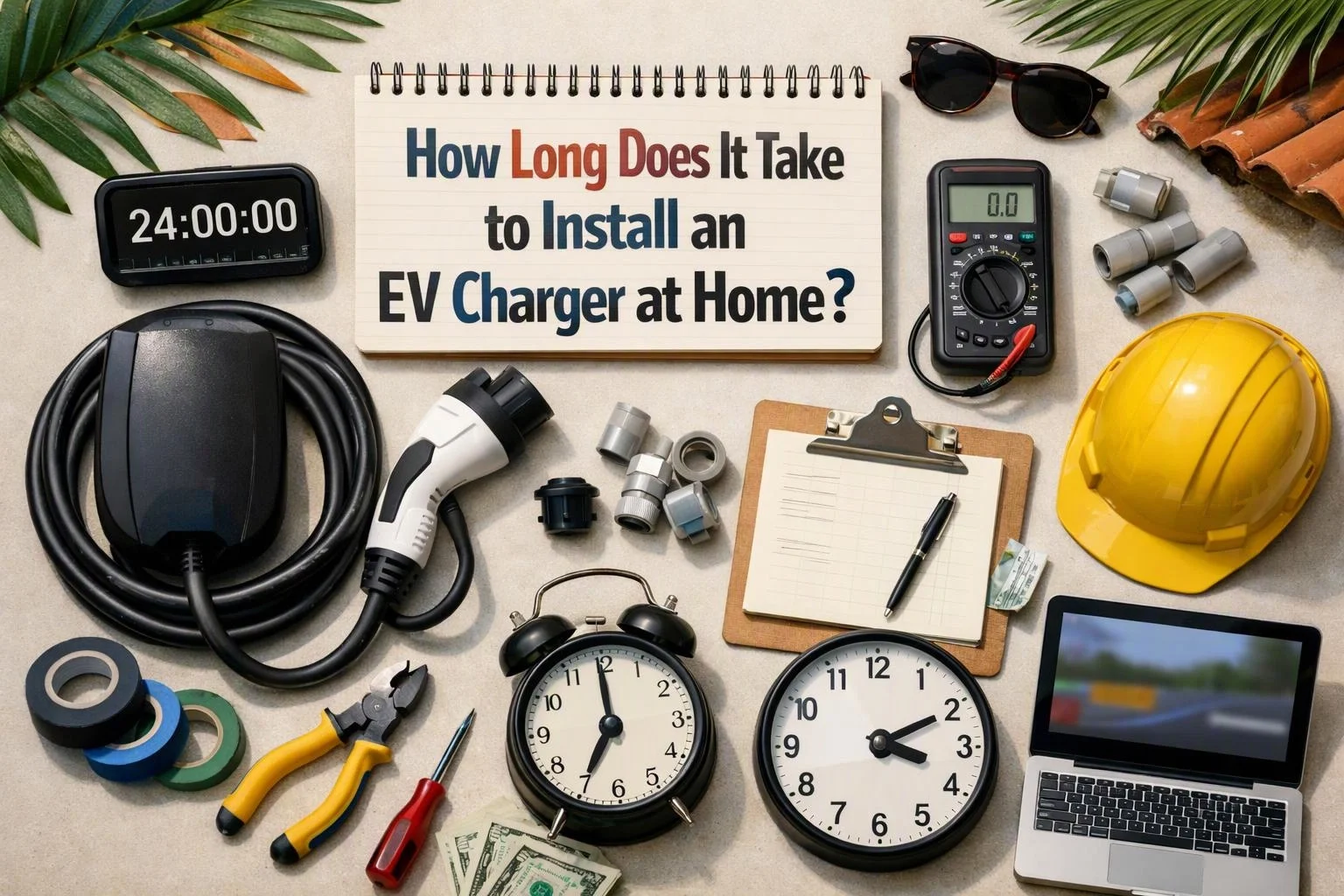
What Determines the Home EV Charger Installation Timeline?
Home EV charger installation time depends on the existing electrical system, the charger location, the wiring path, and local approval requirements.
We inspect the electrical panel, confirm whether a dedicated circuit is needed, and review the route from the panel to the charger. A permit and electrical inspection can add approval steps before the project is complete.
Our team also checks whether the home electrical system supports the selected charger. A Level 2 EV charger may require different preparation from a smaller charging setup, especially when the service capacity or wiring route needs additional work.
Which Installation Tasks Affect the Schedule?
The installation schedule changes when the project requires additional electrical work, a longer wiring route, permitting, or inspection.
We organize the work around the conditions found during the site assessment. The table shows how each task can affect the project sequence.
| Installation task | How it affects the schedule |
|---|---|
| Site assessment | We review the parking area, panel location, charger compatibility, and access conditions before planning the work. |
| Load calculation | The calculation shows whether the home can support the charger's electrical load along with existing demand. |
| Dedicated circuit installation | A new circuit adds wiring, a circuit breaker, and connection work between the panel and charger. |
| Electrical panel upgrade | A panel upgrade expands the electrical work and may require additional coordination before charger installation. |
| Charger mounting | The wall, garage, or outdoor mounting surface affects the wiring route and equipment placement. |
| Electrical inspection | Required inspection scheduling can affect when the installation receives final approval. |
What Can Shorten or Extend the Installation Timeline?
The installation timeline becomes shorter or longer according to the site's electrical capacity, access conditions, project scope, and approval steps.
We identify these factors before work begins so the schedule reflects the actual home. The main items are:
How Does the Home Assessment Shape the Schedule?
The home electrical assessment establishes whether the existing electrical system can support the EV charger and identifies work that must happen before installation.
We review service capacity, complete a load calculation, and inspect the panelboard for available space and suitable connections. Our team also checks grounding and confirms that the charger matches the home's electrical conditions.
The assessment helps us separate a straightforward charger connection from a project that needs new wiring, conduit, or an electrical panel upgrade. We use those findings to explain the installation sequence before scheduling the work.
When Is a Dedicated Circuit or Panel Upgrade Needed?
A dedicated circuit or electrical panel upgrade is needed when the existing system cannot safely support the charger's electrical load or installation path.
We install a dedicated circuit when the charger requires its own protected connection. The circuit includes the proper circuit breaker and wiring for the selected equipment.
An electrical panel upgrade may be necessary when the panel lacks capacity, space, or compatible equipment. We also review whether conduit is needed to protect wiring along the route to a garage, driveway, or other parking area.
What Happens During a Home EV Charger Installation?
Home EV charger installation follows a sequence of assessment, electrical preparation, charger connection, testing, and any required approval.
Our crew keeps the sequence tied to the conditions found at the home. The main steps are:
How Do Bidirectional Chargers Change the Project Scope?
A bidirectional EV charger adds equipment and coordination beyond a standard charger installation, so the project scope requires a more detailed electrical assessment.
Bidirectional equipment can support home backup power by allowing energy to move between a battery electric vehicle and the home. We review the electrical panel, energy management system, and transfer equipment before planning this type of work.
Our team also checks vehicle compatibility and the intended backup operation. These added connections can change the wiring, controls, commissioning, and approval steps.
What Should You Have Ready Before Scheduling Installation?
Having basic project details ready helps us evaluate the charging setup and prepare a useful schedule.
Before contacting us, gather the following information:
How Do You Get an Installation Schedule and Quote?
Earth Electric determines the installation schedule and quote after reviewing the electrical system, charger location, wiring route, and required project work.
We use the site assessment and load calculation to define the project scope. The quote can account for the dedicated circuit, panel work, conduit, mounting, permit steps, inspection needs, and commissioning that apply to the home.
EV Charger Installation planning is clearer when the equipment and electrical conditions are reviewed together. Contact our team to discuss the site and request a schedule and quote based on the actual work.
Free Estimates Available
Questions About Home EV Charger Installation
Does installing an EV charger require a dedicated circuit?
Yes, an EV charger may require a dedicated circuit when the equipment needs its own protected electrical connection. Earth Electric reviews the charger requirements, panel capacity, and electrical load before selecting the circuit arrangement.
Can an EV charger be installed if the electrical panel is full?
Yes, an EV charger can be installed with a full electrical panel when the project includes an approved solution for capacity and circuit connections. We determine whether the home needs panel work or another suitable electrical arrangement.
Does an EV charger need to be hardwired?
No, an EV charger does not always need to be hardwired. A plug-in charger may work when the outlet, circuit, and charger requirements are suitable, while a hardwired charger connects directly to the dedicated circuit.
Can an EV charger be installed outdoors?
Yes, an EV charger can be installed outdoors when the charger, mounting location, wiring, and protective equipment are suitable for outdoor use. We review the driveway or exterior wall, weather exposure, conduit path, and access before installation.
What should I ask before scheduling a home EV charger installation?
Ask what the site assessment covers, whether the charger needs a dedicated circuit, how the wiring route will be handled, and whether permits or inspection apply. We can also explain the project scope, installation schedule, commissioning steps, and quote after reviewing the home.
Related Resources
Electrical Panel Upgrade Cost Factors: Size, Capacity, Wiring, and Installation Scope
What It CostsEV Charger Installation Cost Factors: Wiring Distance, Panel Capacity, and Charger Type
What to AvoidEV Charger Installation Mistakes: What to Avoid Before Adding Home Charging
Everything About ItEV Charger Installation and Bidirectional Home-Backup Planning