
What Is a Ground Fault?
A ground fault is an unintended electrical connection between an energized conductor and a grounded surface, enclosure, or person. The connection lets current leave its normal circuit path. A ground fault can create shock and fire hazards, so protective devices such as GFCI outlets are designed to detect the imbalance and interrupt power.
Quick Facts About Ground fault
Category
Electrical fault condition
Used for
GFCI protection and troubleshooting
Common confusion
Often confused with a circuit overload
Also called
Earth fault
Often discussed with
GFCI Outlet Installation, Electrical Troubleshooting
Key Takeaways About Ground fault
- Current leaves its intended circuit path.
- Moisture and damaged insulation can create fault paths.
- A ground fault is not the same as a circuit overload.
How Ground fault Works

A ground fault occurs when electricity finds an unintended path to ground through a metal enclosure, wiring system, wet surface, or person. Under normal conditions, current travels out on the hot conductor and returns on the neutral conductor. A difference between those paths signals that some current has moved elsewhere.
Related glossary terms: AFCI, Bonding jumper, Ground rod.
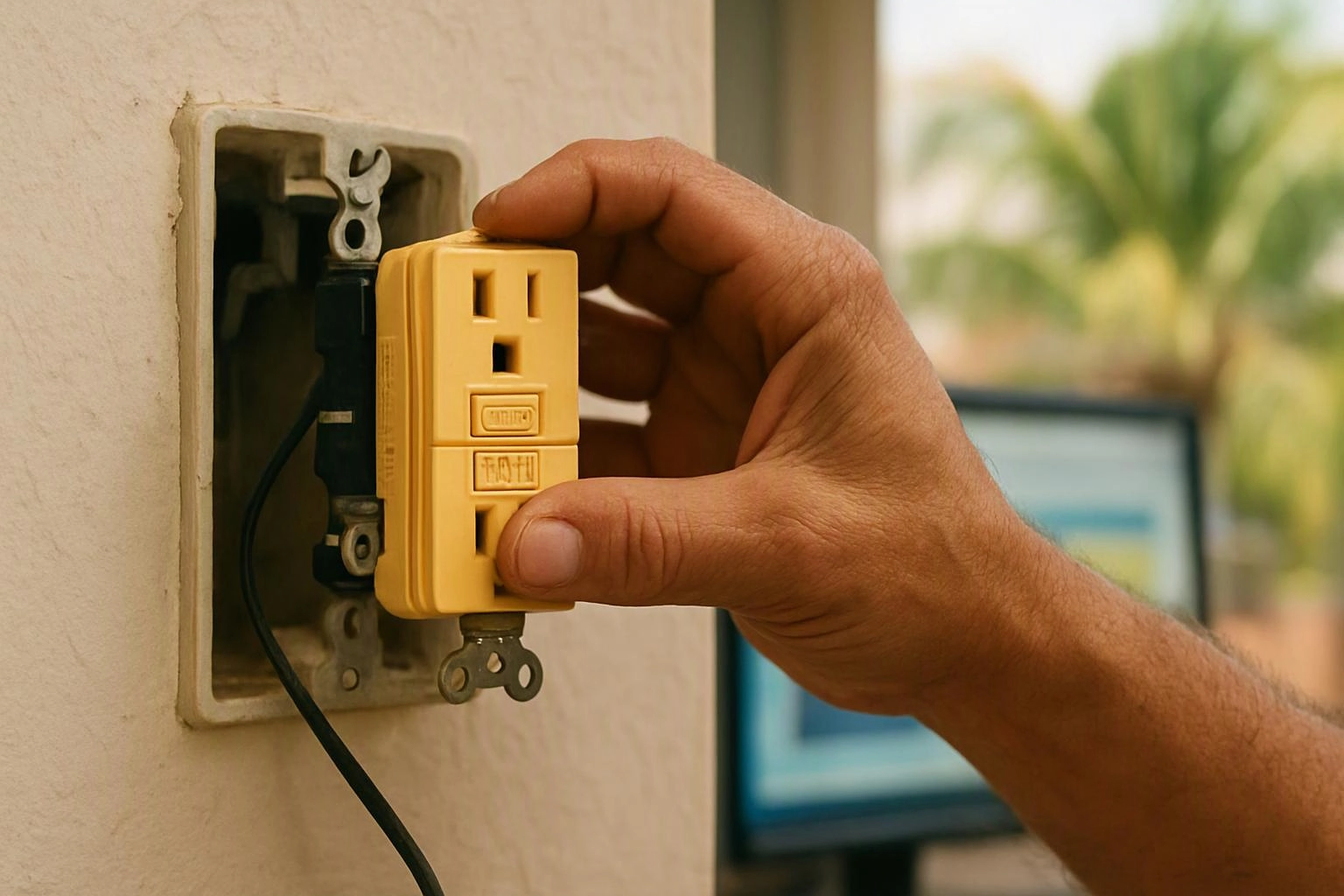
A GFCI outlet monitors the relationship between outgoing and returning current. When the device detects an unsafe imbalance, the GFCI opens the circuit and stops power at the protected outlet or downstream outlets. Testing also helps distinguish a faulty device from a wiring problem, especially when moisture, damaged insulation, or a loose connection may be involved.
From the Earth Electric team
When we inspect a suspected ground fault, we check the GFCI device, connected wiring, grounding paths, and nearby conditions that could introduce moisture. Our team also looks for repeated trips, damaged insulation, loose terminations, and equipment faults before restoring power.
Ground fault in Practice: A Real-World Example
A bathroom GFCI outlet trips when a hair dryer is connected. The fault may come from the appliance, moisture near the receptacle, or damaged wiring, so the circuit requires testing before the outlet is reset repeatedly.
Related Terms
AFCI
An AFCI is an arc-fault circuit interrupter that detects electrical patterns linked to unintended arcing and…
Bonding jumper
Bonding jumper is a short conductor that connects metal parts of an electrical system so those…
Ground rod
A ground rod is a metal grounding electrode driven into the earth and connected to an…
Receptacle
A receptacle is a wiring device that provides contact points for a plug and connects an…
Earth Electric
Have Questions About Ground fault?
Contact Earth Electric for practical guidance on Ground fault and related 24 hour electrician work in Miami.