
What Is Ballast?
Ballast is an electrical component that controls current in fluorescent or other gas-discharge lighting. The ballast helps the lamp start and keeps electrical flow within a usable range during operation. Without a compatible ballast, a fluorescent fixture may flicker, fail to start, overheat, or produce uneven light.
Quick Facts About Ballast
Category
Lighting control component
Used for
Fluorescent and gas-discharge lamps
Common confusion
Often confused with an LED driver
Also called
Fluorescent ballast, Electronic ballast
Often discussed with
Recessed Lighting Installation, Electrical Troubleshooting
Key Takeaways About Ballast
- Ballasts support fluorescent and gas-discharge lamps.
- Compatibility depends on lamp and fixture design.
- A ballast is not the same as an LED driver.
How Ballast Works
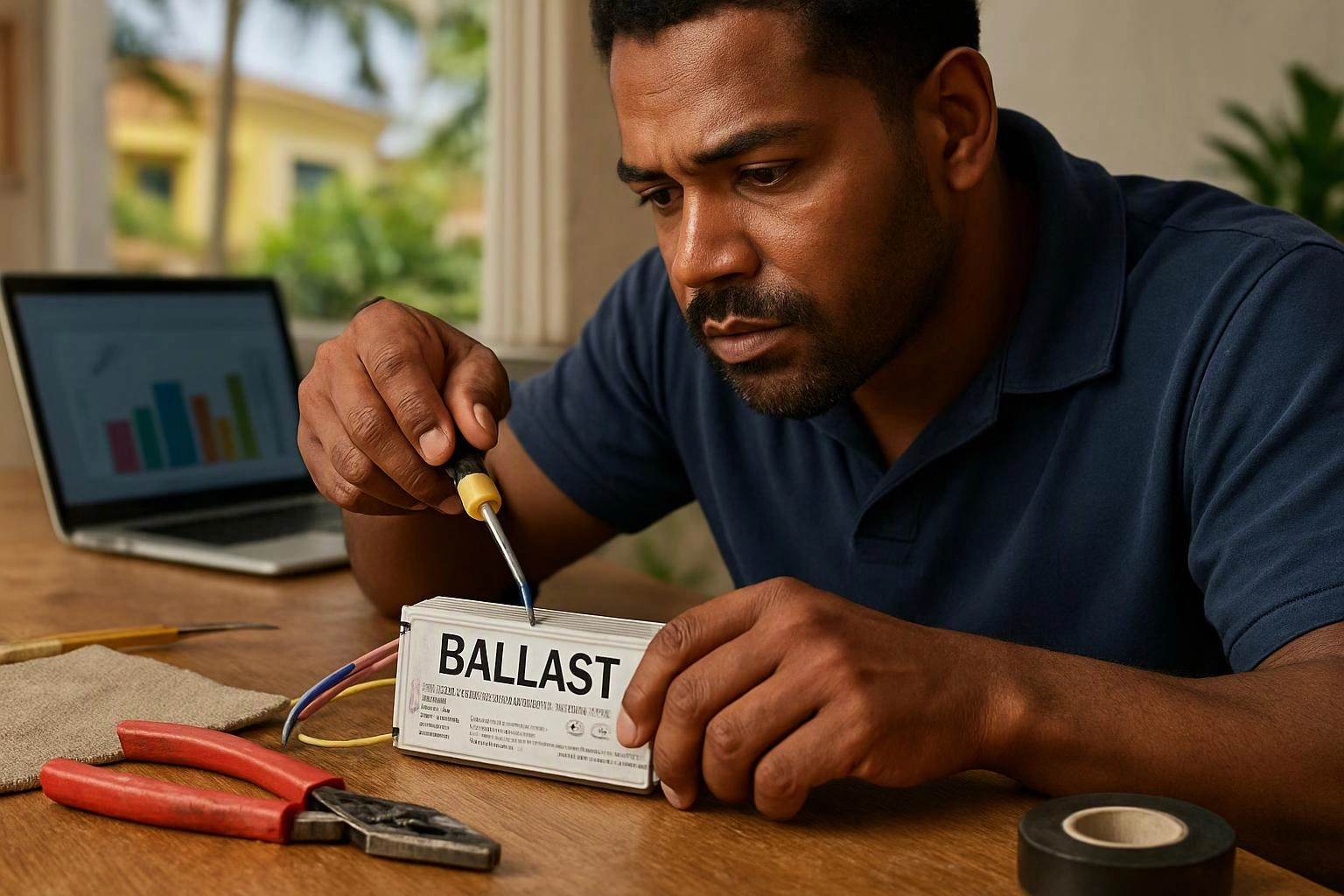
Ballast controls the electrical current that flows through a fluorescent lamp after the lamp starts. The component provides the starting conditions the lamp needs, then limits current during normal operation. This control helps the lamp produce steady light without drawing uncontrolled current.
Related glossary terms: LED driver, Capacitor, Voltage drop.
Fluorescent fixtures may use magnetic or electronic designs. Magnetic types can work with a starter and may produce a noticeable hum, while electronic types manage starting and operation through electronic circuits. A ballast must match the lamp type and fixture wiring. An LED retrofit may need an LED driver or a ballast-bypass change, depending on the lamp design. During recessed lighting work, the existing housing and wiring determine whether the original ballast remains part of the circuit.
From the Earth Electric team
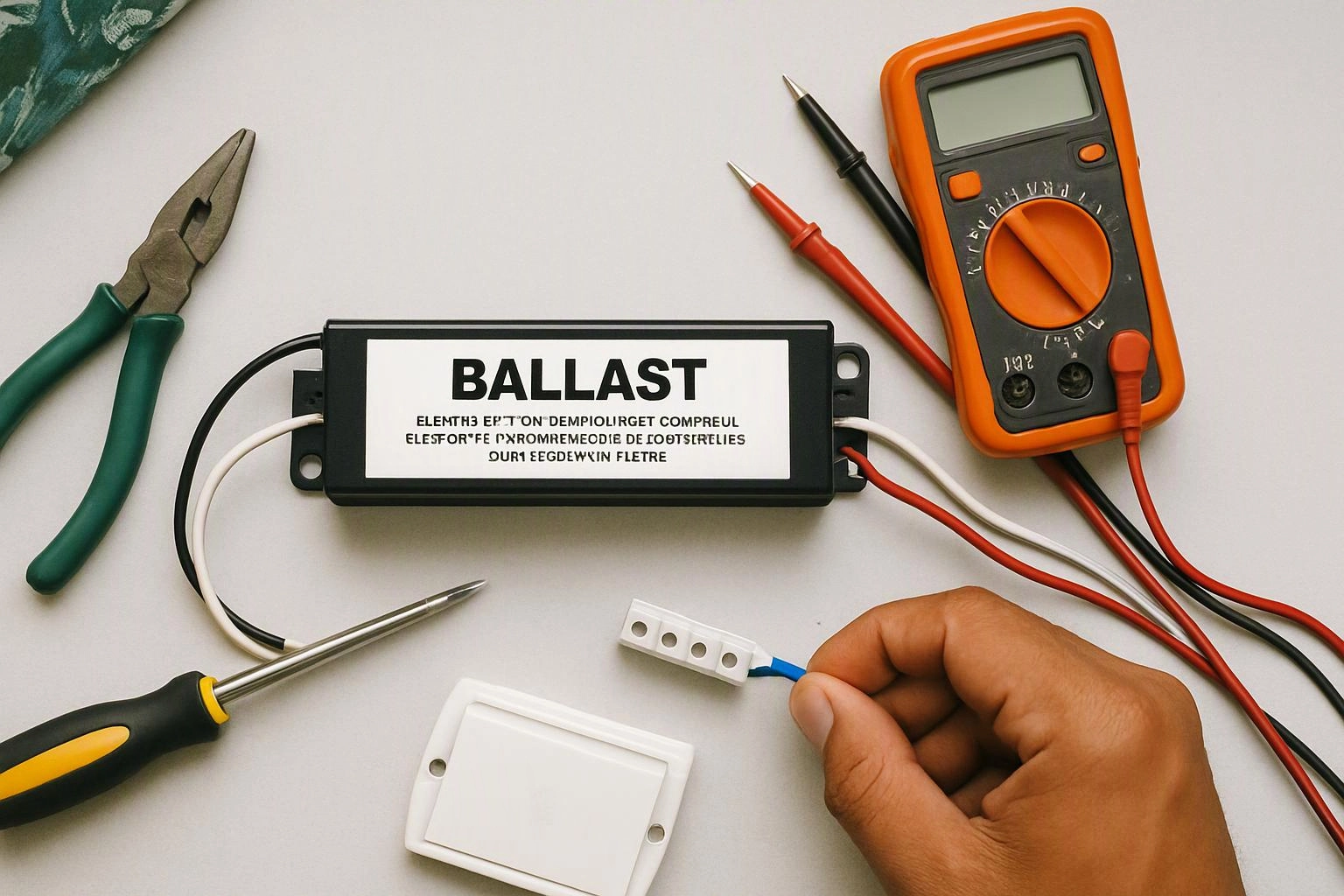
When we inspect a recessed lighting fixture, we check the ballast label, lamp compatibility, wiring condition, and signs of heat damage. Our team also verifies whether a proposed LED lamp works with the existing ballast or requires a different wiring method.
Ballast in Practice: A Real-World Example
A recessed fluorescent fixture may flicker after its lamp is replaced. An electrician checks the ballast and fixture wiring to determine whether the ballast is compatible, failing, or unsuitable for the planned LED conversion.
Related Terms
LED driver
An LED driver is an electronic power-control device that converts incoming electrical power into the voltage…
Capacitor
A capacitor is an electrical component that stores and releases energy to support a motor or…
Voltage drop
Voltage drop is the reduction in electrical pressure that occurs as current travels through a conductor…
Earth Electric
Have Questions About Ballast?
Contact Earth Electric for practical guidance on Ballast and related 24 hour electrician work in Miami.