Outdoor, Landscape, and Security Lighting: Installation and Repair Planning
Outdoor lighting installation planning starts with a site inspection, lighting goals, fixture placement, power, controls, drainage, and safety checks. Earth Electric uses the same checklist to plan landscape lighting, security lighting, repairs, and the work needed for a clear quote.
Get a Free EstimateWhat Should an Outdoor Lighting Installation Checklist Cover?
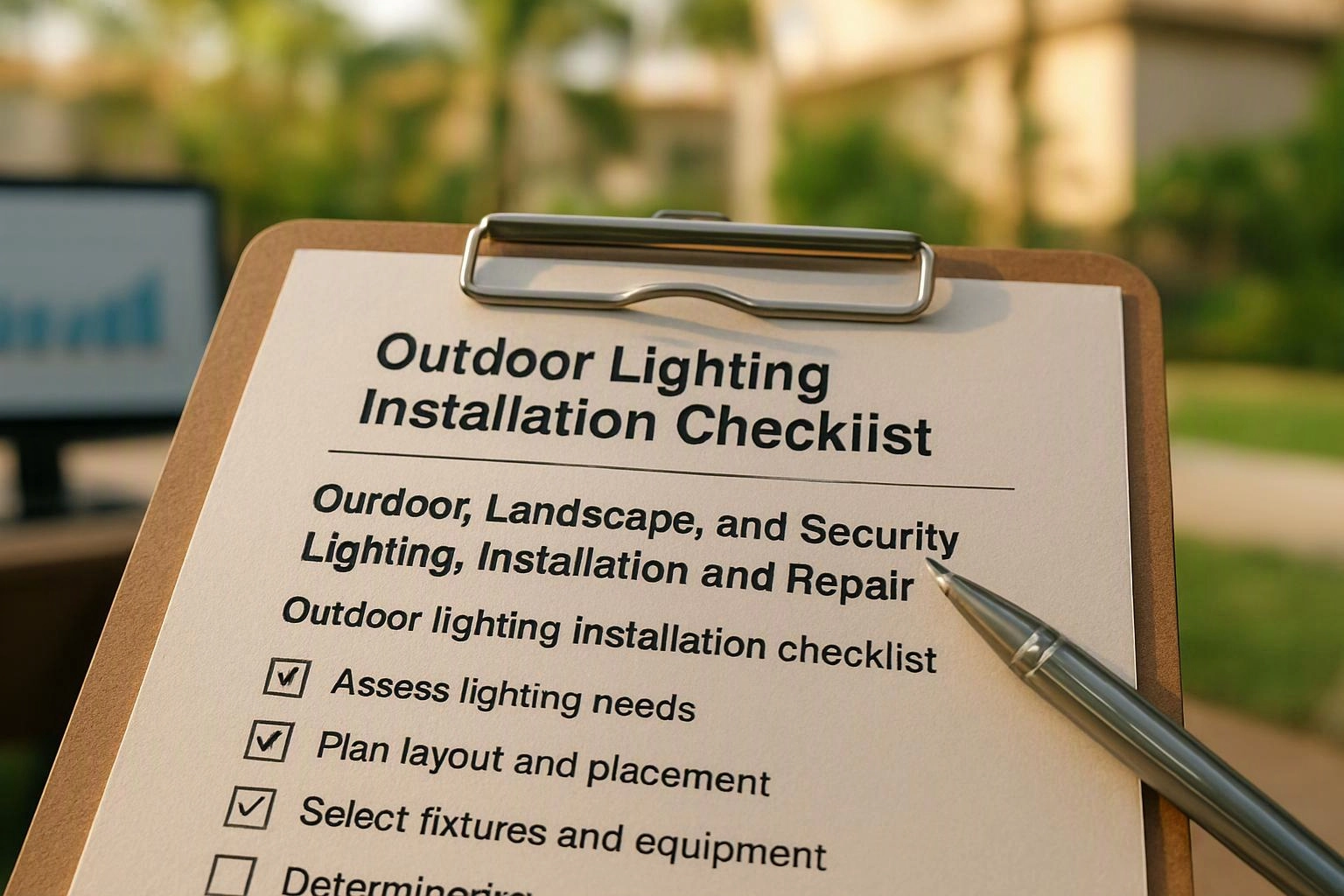
Outdoor lighting installation requires a coordinated checklist for landscape lighting, security lighting, electrical safety, installation, and repair planning.
An outdoor lighting installation checklist should cover the property, lighting purpose, fixture locations, wiring route, power supply, controls, drainage, and final testing. We review how outdoor lights will work with the landscape, access points, and existing electrical system.
Our team also checks the power source, low-voltage wiring, junction boxes, transformer, and weather exposure. These details help us plan safe connections and reduce problems caused by moisture, poor drainage, or unsuitable fixture placement.
How to Plan Outdoor Lighting Before Installation
Outdoor lighting planning begins with a property walkthrough and a clear lighting layout. We connect each lighting goal to a practical wiring route, power source, control method, and fixture location.
Identify the Areas That Need Light
Walkways, steps, driveways, entry doors, patios, garden beds, and dark zones are common areas that need planned lighting.
We assess how people move through the property and where shadows may affect visibility. Our layout balances useful illumination with drainage, plant growth, and safe access to fixtures and wiring.
Choose Fixture Placement and Light Direction
Fixture placement determines where light lands, how much glare reaches the viewer, and whether light trespass affects nearby rooms or properties. Path lights guide movement, spotlights highlight features, and floodlights cover wider security zones.
We aim fixtures away from eyes, windows, and cameras when possible. Our team adjusts light direction and mounting height to support visibility without creating harsh glare.
How Does Landscape Lighting Installation Differ From Security Lighting?
Landscape lighting emphasizes appearance, navigation, and outdoor usability, while security lighting emphasizes visibility around access points and vulnerable areas. We plan both systems around the property’s layout and the people who use it.
| Lighting type | Main purpose | Common controls and fixtures |
|---|---|---|
| Landscape lighting | Appearance, navigation, and outdoor usability | Path lighting, accent lighting, timers, and photocells |
| Security lighting | Visibility around access points and vulnerable areas | Floodlighting, motion sensors, and dusk-to-dawn control |
| Combined lighting | Layered visibility with glare control | Separate zones and coordinated controls |
We use fixture direction, shielding, and separate lighting zones to control glare. The final layout should help people see steps and access points without washing out cameras or sending unwanted light toward neighboring spaces.
What Should Be Checked During Outdoor Lighting Installation?
Outdoor lighting installation should be checked for secure fixtures, protected connections, suitable cable routing, electrical safety, correct controls, and consistent illumination. We inspect the complete system instead of focusing only on the visible fixture.
Our team checks cable routing, weatherproof connections, fixture anchoring, grounding, and GFCI protection. We also verify transformer settings and test the photocell, timer, or motion sensor that controls each zone.
Drainage and weather exposure matter because standing water can damage connectors, lamps, lenses, and cable insulation. We complete electrical testing and final testing after installation so the system operates as planned.
How Can You Troubleshoot Landscape Lighting Problems?
Landscape lighting troubleshooting starts with safe visual checks of the fixture, control, GFCI, visible wiring, and signs of water damage; Earth Electric handles electrical testing and repairs when the fault is not safely accessible.
You can note whether the problem affects one fixture, one zone, or the whole system. Do not open energized equipment or disturb buried wiring while looking for the cause.
When Does Landscape Lighting Need Repair?
Landscape lighting needs repair when fixtures remain dark, flicker, show damage, expose wiring, or allow moisture into electrical components. Intermittent lighting can also point to a loose connection, damaged underground cable, corrosion, or water damage.
We trace the problem from the fixture through the cable, connector, transformer, controls, and power source. Our repair scope addresses the actual fault and includes safety checks before the system returns to service.
A cracked lens, loose fixture, or corroded connector can allow further weather exposure. We inspect these parts and confirm that repaired fixtures remain secure and properly directed.
What Should a Security Lighting Installation Plan Include?
We review entry points, the driveway, side yard, backyard, and camera viewing areas.
Motion sensors can activate light when movement is detected, while dusk-to-dawn control supports steady coverage during dark hours. We coordinate these controls so one setting does not undermine another.
Floodlights should cover the intended zone without pointing directly toward windows or cameras. Our team uses fixture direction and glare control to support visibility while limiting light trespass.
What Changes the Quote for an Outdoor Lighting Project?
The outdoor lighting quote changes with fixture selection, wiring access, power requirements, controls, excavation, existing damage, and the condition of the electrical system. Earth Electric provides Free Estimates Available so the scope can be reviewed before work begins.
We assess fixture count, fixture type, wiring distance, trenching, power capacity, transformer needs, and the control system. Repair access and site conditions can also change the work required to reach underground cable or damaged connections.
Our quote explains the planned fixtures, wiring route, controls, repair scope, testing, and any site work included. Requesting a quote gives our team the information needed to match the plan to the property.
How Earth Electric Turns the Checklist Into a Work Plan
Earth Electric turns the checklist into a work plan by connecting site conditions, lighting objectives, repair findings, and safety testing. We use the plan to keep installation decisions clear from the first walkthrough through final testing.
What Should You Confirm Before Outdoor Lighting Work Begins?
Before outdoor lighting work begins, confirm the lighting zones, fixture locations, control preferences, access requirements, existing wiring, repair scope, and final testing plan. Clear decisions help our crew prepare the right materials and work sequence.
Questions About Outdoor Lighting Installation and Repair
Can outdoor lighting share an existing electrical circuit?
Yes, outdoor lighting can share an existing electrical circuit when the circuit has suitable capacity, protection, wiring, and control arrangements. Earth Electric checks the circuit, load, GFCI protection, and connection points before approving that approach.
Why do landscape lights flicker after rain?
Landscape lights can flicker after rain when water reaches a connector, cable, fixture, lamp, or transformer connection. We inspect for water intrusion, damaged insulation, loose connections, poor drainage, and corrosion before completing electrical testing.
What should be checked when only part of a landscape lighting system stops working?
When only part of a landscape lighting system stops working, check the affected zone’s control, visible connections, cable route, fixtures, and transformer output. We trace the zone to separate a fixture fault from a damaged cable, loose connection, or control problem.
Can motion sensors and dusk-to-dawn controls be used together?
Yes, motion sensors and dusk-to-dawn controls can be used together when the control arrangement supports the intended operating pattern. We plan the controls so the security lights respond to darkness and movement without unwanted cycling.
How do you prevent security lights from creating glare?
Security lights are less likely to create glare when fixtures are aimed at the needed zone, shielded from direct view, and kept away from windows and camera lenses.
What should be included in an outdoor lighting repair request?
An outdoor lighting repair request should include the affected fixtures, symptoms, recent weather exposure, control settings, visible damage, and whether a GFCI has tripped. Include photos when safe, and tell us whether the outage affects one fixture, one zone, or the full system.
Contact Earth Electric to review your outdoor lighting installation, landscape lighting repair, or security lighting plan. We can turn the site conditions and lighting goals into a clear scope for installation, testing, or repair.
Get a Free EstimateRelated Resources
Whole-House Surge Protection: Planning and Installation Questions
Everything About ItGenerator Installation, Repair, and Transfer Switch Planning
Everything About ItEV Charger Installation and Bidirectional Home-Backup Planning
Everything About ItPool and Hot Tub Electrical Safety and Wiring Planning